📅 Updated August 6, 2026
Key Takeaways
- The right residential plumber is verified, not just recommended: license, insurance, warranty, and price in writing come before any work.
- The ten questions to ask a plumber below cover licensing, specialty fit, pricing, permits, and who is standing in your kitchen.
- South Carolina lets you check any license yourself online in about a minute, and a good residential plumber hands you the number before you ask.
- Hiring a plumber on price alone is how a cheap repair becomes an expensive one, so weigh the answers together.
- Watch for the five plumber red flags that end the interview: no license number, vague pricing, big deposits, permit dodging, and pressure to decide today.
- Knowing how to choose a plumber in Columbia SC includes local knowledge: our clay soil, older pipe materials, and city permit rules are not the same everywhere.
- A residential plumber who welcomes every question on this list is usually the one you were looking for.
Finding a residential plumber is easy, and finding the right one takes about ten good questions. Before anyone touches your pipes, you want to know they are licensed, insured, experienced in the work you need, and willing to put an exact price in writing. This guide walks through the ten questions to ask a plumber before hiring, the red flags that end the conversation with any residential plumber, and how to choose a plumber in Columbia SC where local conditions and permit rules raise the stakes.
Why Vetting Matters Before the Van Arrives
Most plumbing horror stories start the same way: a problem, a hurry, and the first name that answered the phone. The work is invisible once the walls close and the cabinet doors shut, which is exactly why hiring a plumber deserves more scrutiny than hiring most trades. You are buying judgment you cannot inspect afterward.
The good news is that a few direct questions sort the field fast. A qualified residential plumber has heard every one of them and answers without flinching, because the answers are the easy part when the paperwork is real. The ones who dodge are doing you a favor by dodging early.
The cost of skipping this step is rarely the first invoice. It is the second one, when a different residential plumber opens the wall and finds what the cheap job left behind. Ten minutes of questions up front is the least expensive plumbing work you will ever do, and unlike everything else in this trade, asking them is free.
The 10 Questions to Ask a Residential Plumber
Here are the questions to ask a plumber before any work is scheduled, in the order we would put them to any residential plumber ourselves. Ask them over the phone or at the door, and pay as much attention to how they are answered as to what the answers are.
1. Are You Licensed, and Can I Verify It?
Every legitimate plumbing contractor in South Carolina carries a state license earned through years of documented experience and an exam on the trade and local codes. The question is not just whether they have one. It is whether they hand you the number without hesitation, because the state lets you verify any contractor license online in about a minute.
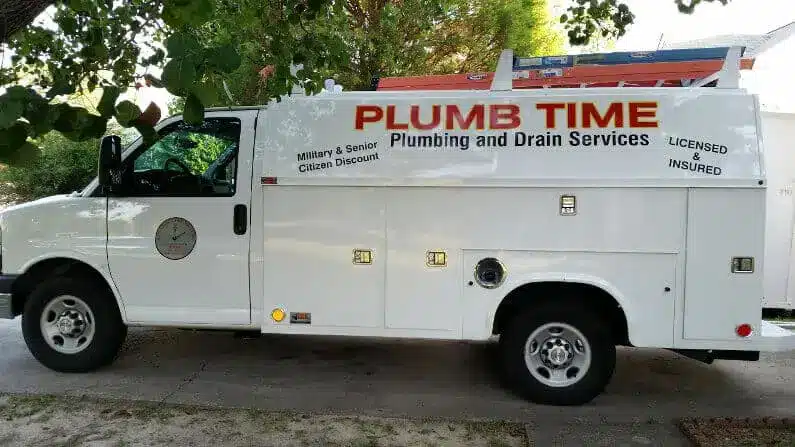
Our answer to this question is painted on the truck. Plumb Time holds three state licenses covering plumbing, gas fitting, and mechanical contracting, all at the highest class the state issues, and all three numbers sit in the footer of this website next to the verification link. That is the standard to hold every residential plumber to: numbers offered, not extracted.
It helps to know what the license represents. In South Carolina a residential plumber earns it through years of documented field experience followed by an exam covering the trade and the plumbing codes the work must meet. The license class also caps the size of job a contractor may legally take, so the number tells you both that they are qualified and for what.
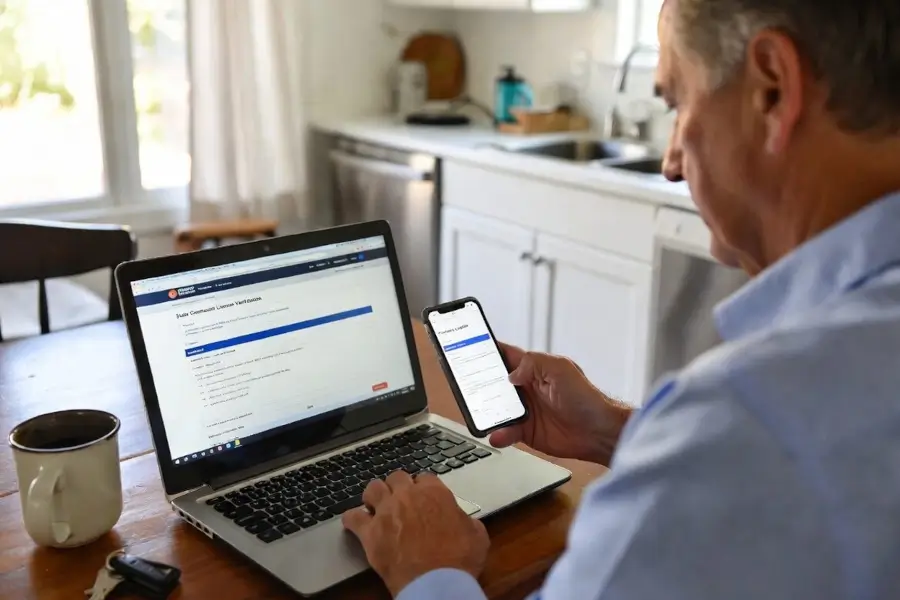
The first of the questions to ask a plumber has a one minute homework step: run the license number through the state lookup yourself.
2. Do You Carry Insurance?
Liability insurance and workers compensation protect you, not just the company. Plumbing is a trade where a slipped fitting can flood a finished basement, and if the person who caused it is uninsured, the repair bill finds its way to the homeowner. Hiring a plumber without insurance is a gamble where you hold the losing ticket. Ask for proof, and expect it to appear without drama.
Know what proof looks like too. A certificate of insurance is a one page document any insured company can email the same day, naming the carrier and coverage amounts. A bond is not the same thing, and a verbal “we are covered” is not either. If a residential plumber cannot produce the certificate, the coverage may not exist when you need it.
3. Do You Handle This Kind of Work Regularly?
Plumbers specialize the way doctors do. Some companies live in new construction, some in commercial buildings, and some, like us, in the daily repair and replacement work of occupied homes. A residential plumber who spends every week in kitchens, bathrooms, and crawl spaces brings pattern recognition that a crew borrowed from a job site cannot.
Ask what share of their work looks like yours. If you need a fixture repair and they mostly plumb subdivisions, keep dialing. The rhythm of the two jobs is different: construction crews run pipe in empty framing on a schedule, while a residential plumber works around your furniture, your water shutoffs, and your afternoon, and leaves the house livable the same day.
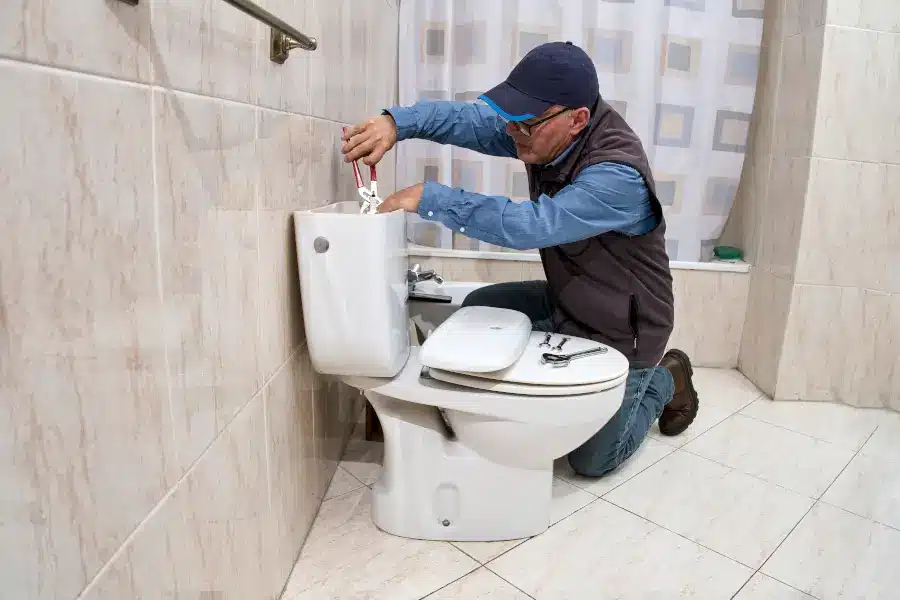
The specialty question in one picture: a residential plumber earns his living in exactly this kind of household repair, week in and week out.
4. Do You Warranty Your Work?
Repairs and installations should come with a guarantee in plain language: what is covered, for how long, and what happens if the original problem returns. A residential plumber confident in his work has no trouble backing it. If the answer is a shrug, or a warranty that evaporates the moment you ask what it covers, that tells you how they expect the work to hold up.
Listen for the distinction between parts and labor. A fixture carries the manufacturer’s warranty, but the workmanship is on the residential plumber who installed it, and the two should be named separately when you ask. A company that explains that difference without being pushed is a company that has honored both before.
5. Can I See References or Reviews?
Ask for a few recent customers, then follow up and look. Public reviews are even harder to fake at volume, so read the specifics: does the same tech name keep appearing, do reviewers mention the price matching the quote, do problems get responses? Our customer reviews stay posted in full because long-term local customers are the only advertising that compounds. Any established company should be able to point you somewhere similar.
Read reviews the way a skeptic would. Recent ones outweigh old ones, specific ones outweigh star counts, and how a residential plumber answers the rare bad review tells you more than fifty good ones. A perfect wall of five star one liners posted the same week is its own kind of warning.
6. What Are Your Real Hours?
Get the schedule in plain terms, including what happens after hours and what it costs. Our answer is simple: Monday through Friday, 8 to 5, with weekend slots reserved for existing clients. Be a little skeptical of anyone promising around-the-clock everything to everyone, because that promise is priced into every invoice they write. Clear hours plainly stated beat big claims vaguely kept.
While you are on the schedule topic, ask how they communicate. A real arrival window, a call when the tech is on the way, and a heads up if the day slips are small courtesies that predict how the whole job will be handled. A company that cannot manage its own calendar will not manage your project any better.
7. Can I Get the Price in Writing Before Work Starts?
This is the question that separates companies fastest. A phone estimate is a guess, and an honest company says so. What you want is a firm number after eyes are on the problem: labor, materials, and total, on paper, before a wrench comes off the truck. At Plumb Time the exact price is quoted in writing before any work begins, every job, no exceptions.
Ask how they bill too. Hourly billing puts the clock risk on you; a written flat price puts it on the company, where it belongs. If travel fees or minimums exist, they should be volunteered up front, not found later on the invoice.
The written number protects both sides, which is why a confident residential plumber prefers it too. If the job changes once it is open, the change gets written down the same way before it proceeds. Paper is not about distrust. It is about both people remembering the same conversation a week later.
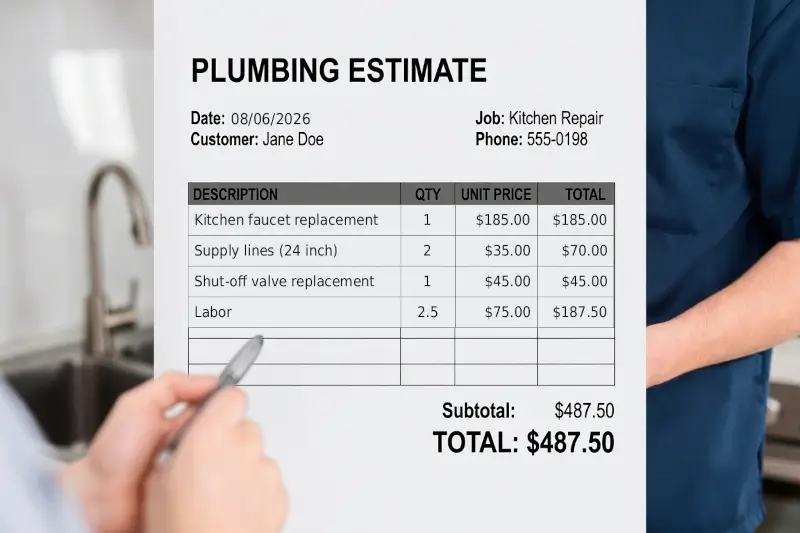
Hiring a plumber the right way looks like this: every line item and the total on paper before the work starts, never after.
8. Will You Pull the Permit?
Plenty of plumbing work in the Columbia area is permitted work: water heater swaps, gas lines, sewer repairs, and more. The permit exists so an inspector confirms the work meets code, which protects you at resale and keeps insurance claims clean. Ask whether your job needs one, who pulls it, and when the inspection happens. A company that shrugs the permit off is cutting a corner with your name on it.
Unpermitted work has a long memory. It surfaces in home inspections at resale, complicates insurance claims, and can force finished work to be opened back up years later. The inspection itself is free quality control: a second set of trained eyes confirming the residential plumber did what the code requires. Good companies treat the inspector as a colleague, not an obstacle.
9. Who Shows Up to My House?
A company slogan about decades of experience means little if the person at your door started last month. Ask who is coming and what their experience is. An experienced residential plumber reads a house in the first minute under a sink: shutoff valves that will not turn, a trap hand-tightened by the last handyman, corrosion rings that date the supply lines. That kind of eye only comes from years of repetition.
Here, the answer is on the license. The Master Plumber whose name backs this company has over 28 years in the trade as a working residential plumber, and Tanya, the co-owner, answers every call herself, so you know exactly who you are talking to from the first ring.
10. What Should I Do Differently Going Forward?
Good service does not end at the invoice. A residential plumber who cares about the relationship leaves you knowing what caused the problem and how to keep it from coming back, because teaching the habit beats billing for the repeat. That is also the cheapest test of character on this list, since a residential plumber planning to be around in ten years wants fewer callbacks, not more. If every visit ends with an upsell instead of an explanation, you have learned something important about the business model.
That is all ten questions, and any residential plumber worth hiring will welcome every one of them. The answers take five minutes to collect and can save you years of regret.
Interviewing a Residential Plumber? Start With Us
Call Plumb Time and ask away. Tanya answers the phone, the license numbers are on the truck, and the price arrives in writing before the work does.
5 Plumber Red Flags That End the Interview
The questions above have wrong answers, and some wrong answers are loud enough to stop everything. These five plumber red flags come up in the stories customers tell us about the residential plumber who came before us. When one appears, you do not need the other nine questions to ask a plumber; the interview is over.
None of these five is subtle, and that is the point. Contractors who operate this way rely on hurry. The plumber red flags disappear the moment you slow the conversation down by one phone call, and a residential plumber with nothing to hide will wait while you make it.
If you are reading this after already hiring wrong, the play is simple: stop the work at a clean break point, get everything done so far in writing, and bring in a second opinion before more money moves. Second opinions cost little, and the bad actors on this list are counting on you not getting one.
How to Choose a Plumber in Columbia SC Specifically
Everything above applies anywhere. Knowing how to choose a plumber in Columbia SC adds a local layer, because our area punishes generic work in specific ways. Clay soil shifts and stresses sewer lines, older neighborhoods still carry galvanized and cast iron pipe, and our moderately hard water quietly scales fixtures and appliances. A local residential plumber who works these streets daily has seen your house’s problem in a hundred houses like it.
Local also means accountable. A company based here answers to the same neighbors year after year, which is why we publish our address, our service area, and our license numbers instead of hiding behind a call center. When you are hiring a plumber in this market, ask where the shop sits. Ours is on Delree Street in West Columbia, and the same family has answered the phone since 2006.
Permits are the last local wrinkle. Columbia, West Columbia, and the surrounding jurisdictions each run their own inspections, and a plumber who works here constantly knows which office wants what. That is the difference between a permit pulled in a day and a job stalled for a week.
Housing stock is the quiet advantage. Columbia neighborhoods were built in waves, and each era left its signature materials behind, from mid-century galvanized supply lines to the polybutylene experiments of later decades. A residential plumber who has opened walls in every one of those eras walks in already knowing what your street was built with. That head start is something no out-of-area residential plumber can bring to the estimate.
Ask All Ten, Then Trust Your Read
A residential plumber who answers all ten questions cleanly, shows no red flags, and knows this area is about as close to a safe bet as hiring gets. The plumbing services themselves matter, but the answers to these questions predict how those services will go. Ask them, verify what can be verified, and then trust what the conversation told you.
If two companies both pass, let the small signals break the tie: who answered the phone, who explained without being asked, who put things in writing first. The trade skills between two licensed companies may be close, but the habits around the work rarely are, and the habits are what you live with for the length of the job.
Put Plumb Time Through the Interview
Licensed, insured, family and veteran owned, with over 28 years in the trade and every price in writing first. Call and ask us anything on this list.
Hiring a Plumber: Frequently Asked Questions
These are the questions homeowners ask us most about vetting and choosing a residential plumber. If yours is not here, call and ask it directly. Tanya picks up, and straight answers are the whole point of this page.
How do I verify a plumber's license in South Carolina?
Use the state’s free online contractor lookup and search by name or license number. It takes about a minute and shows whether the license is active. A legitimate residential plumber gives you the numbers without hesitation; ours are printed in the footer of this site and right on the truck door.
What should I ask a plumber over the phone before booking?
Cover the big four fast: license number, proof of insurance, whether they regularly do your kind of work, and whether the price comes in writing before work starts. The full list of questions to ask a plumber runs ten deep, but those four answers tell you whether the rest are worth asking.
Is it ever okay to hire an uninsured plumber?
No. Hiring a plumber without liability insurance and workers compensation moves the risk of floods, damage, and injuries onto you, and one slipped fitting can cost more than the whole job. Insurance is cheap for a legitimate company to carry, so a company without it is telling you something.
What are the biggest plumber red flags?
The five loudest plumber red flags are refusing to share a license number, vague verbal pricing, demanding a large deposit up front, waving off permits on work that needs them, and pressuring you to commit on the spot. Any one of them is reason enough to end the call and keep dialing until they clear.
Should a plumber give me a price over the phone?
A rough range, maybe; a firm price, no. An honest number requires eyes on the problem, since access, pipe condition, and hidden damage change the scope. What matters is what happens after the visit: the exact price should arrive in writing before any work begins, not on the invoice afterward.
How much experience should a residential plumber have?
Look for a licensed residential plumber with years of repair work in occupied homes, not just construction, and ask who is coming to the house. Company age and technician experience are two different numbers. Manny Anderson has spent over 28 years in the trade and holds three state licenses.
Do plumbing repairs in Columbia need a permit?
Many do, including water heater replacements, gas line work, and sewer repairs, while small fixture fixes usually do not. Each local jurisdiction runs its own inspections, so the honest answer depends on the job and the address. Your plumber should tell you which applies and pull the permit themselves.