📅 Updated August 4, 2026
Key Takeaways
- Knowing what to expect in a sewer camera inspection takes the mystery out of the visit: access through a cleanout, a live camera run, and a walkthrough of the footage with you watching.
- The camera carries lights and a transmitter, so problems are not just seen but located and depth marked from above ground.
- Most residential sewer camera inspection visits run 30 to 60 minutes; commercial properties take longer only when there is more line to cover.
- In the Columbia area, sewer line inspection cost typically runs 150 to 500 dollars with an accessible cleanout, quoted exactly when you book.
- The recording is yours to keep, and after any repair, a follow up camera pass is how you make the fix prove itself before anyone calls the job done.
Wondering what to expect in a sewer camera inspection? The short version: a technician finds an access point, sends a waterproof camera through your sewer line, and you watch the live feed together while the pipe shows you exactly what it has been hiding. No digging, no guessing, and no waiting days for results, because the findings conversation happens right there at the monitor.
This guide walks through the whole visit for both homes and businesses: the equipment, the step by step process, what the camera can and cannot find, and what it costs. By the end, what to expect in a sewer camera inspection will be the one part of your plumbing problem with no surprises left in it. Questions first? Call (803) 988-9202.
Do You Need a Sewer Inspection at All?
Start with the honest filter. If your property drains to a septic system rather than a city sewer, as many rural and unincorporated Midlands properties do, a septic company is your call, not a sewer scope. For everyone connected to municipal sewer, the question is when, not whether, and a few situations answer it loudly.
Buying a property tops the list. A standard home inspection checks the fixtures and visible plumbing, then stops at the foundation, leaving the most expensive buried component unexamined. On homes more than 20 years old, where root intrusion and aging pipe materials become likely, a pre-closing residential sewer camera inspection is the cheapest insurance in the transaction. New construction is not exempt: ground settling, construction debris in the line, and poorly compacted trenches all show up on camera under houses with fresh paint.
Local conditions raise the stakes around here. Columbia area neighborhoods still run plenty of original clay tile and cast iron under mature trees, and the clay soil that shifts with our wet winters and dry summers works those old joints loose. That mix makes periodic scoping smart maintenance for older homes, and it is exactly why a commercial sewer camera inspection on a schedule is standard practice for restaurants and property managers who cannot afford surprise closures. Next to one lost weekend of business, the sewer line inspection cost is a rounding error.
The everyday triggers are the ones you already suspect. Stubborn clogs that outlast every clearing. Backups that arrive in pairs across different fixtures. A sewer odor that keeps returning. And yes, the classic: a toy in the toilet, because plumbers find astonishing things in drain lines, and the camera finds where they stopped. If any of those sound familiar, the rest of this post shows you exactly what happens next.
Not Your Ordinary Camera
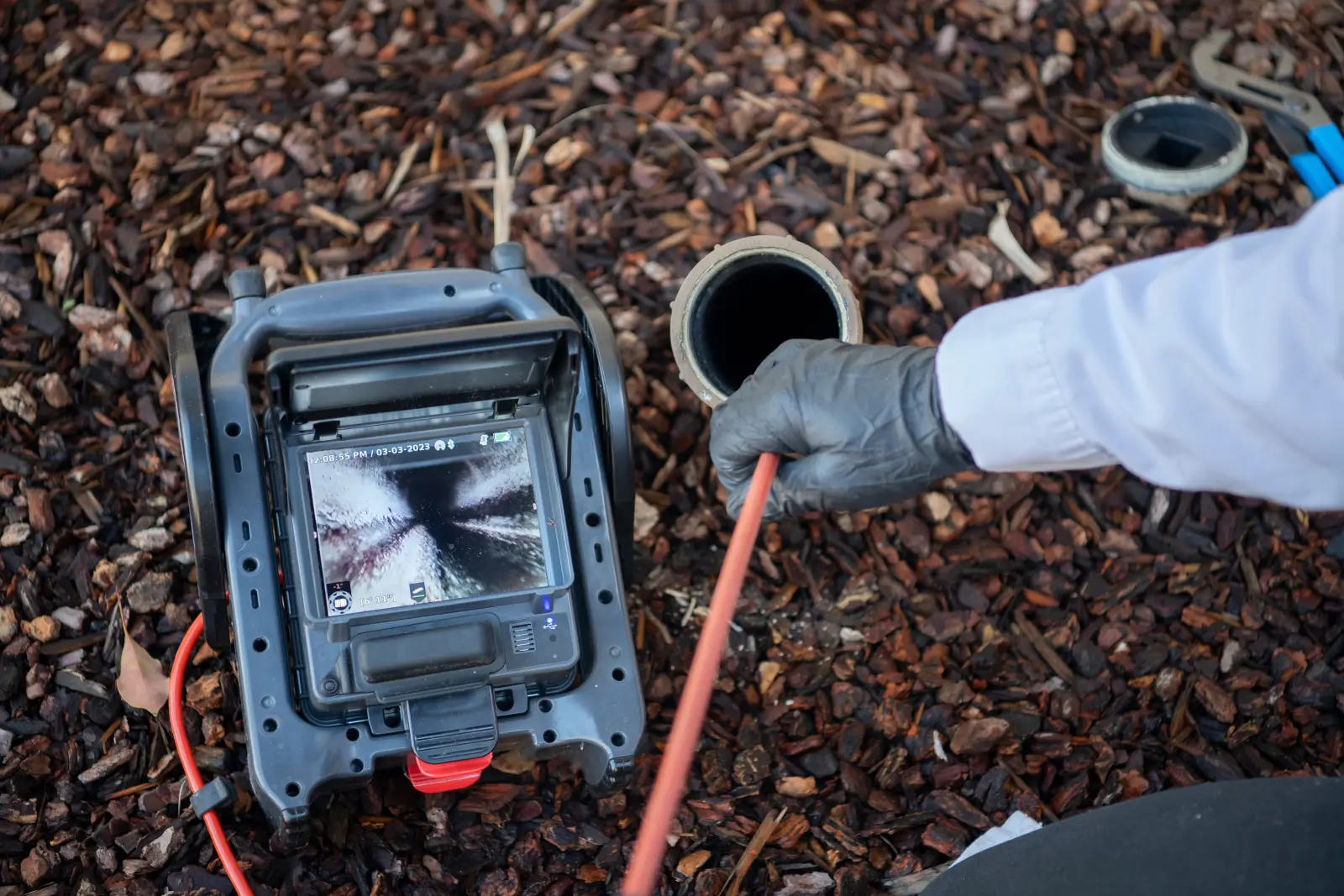
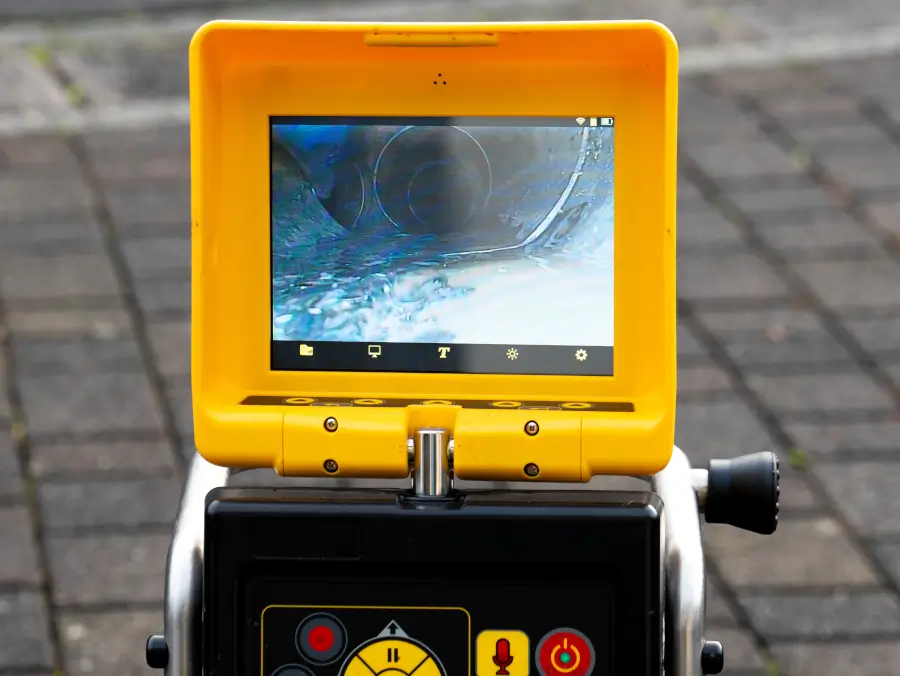
The equipment is purpose built for a filthy, waterlogged, pitch black job. A sealed camera head with its own lights rides the tip of a flexible push rod strong enough to travel hundreds of feet and around the bends of a real plumbing system. As it moves, it streams live video up the cable to a monitor at ground level, where the technician and you watch together in real time.
Lights, camera, and a transmitter that tells us exactly where the problem lives.
Two features separate professional gear from a borescope on a stick. First, the transmitter behind the camera head broadcasts its position, so a locator wand above ground can mark the spot and depth of any finding within inches, turning a would-be excavation into one precise dig.
Second, everything is recorded with an on-screen distance counter, and that measured footage is the professional standard for a reason: NASSCO, the industry body behind the PACP inspection standard, built an entire certification system around turning camera footage into documented, defensible pipe condition data. Your recording is yours to keep for repairs, insurance, or a sale, and that documented footage is the part of what to expect in a sewer camera inspection that keeps paying after the truck leaves.
What to Expect in a Sewer Camera Inspection, Step by Step
Here is exactly what to expect in a sewer camera inspection visit, broken into the five easy steps every inspection follows, from the first call to the footage in your hands. Tanya answers, asks what your drains have been doing, and books a window that fits your schedule, with the price quoted before we arrive. The rest happens on site, and most of it happens faster than people expect.
Plumb Time Plumbing and Drain Services | What to expect in a sewer camera inspection, start to finish
Add it up and most residential sewer camera inspection visits finish inside an hour. You do not need to prepare anything beyond knowing where your fixtures have been acting up, and the work leaves no mess: the camera goes in dirty pipe and comes out of it, and the yard looks exactly like it did when we arrived.
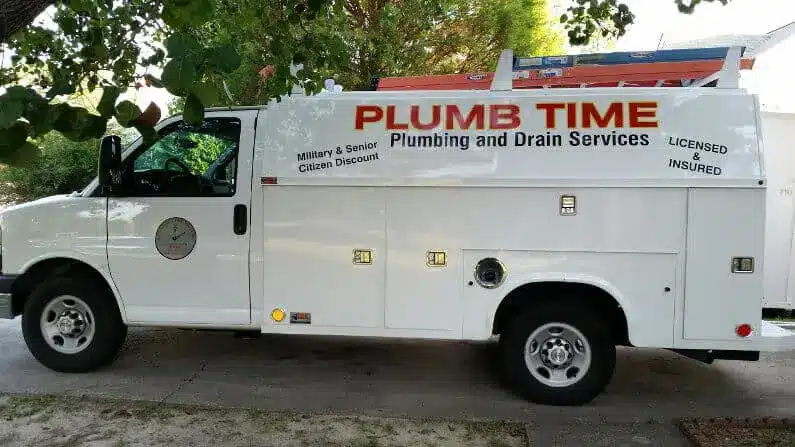
One truck, one visit, and the guesswork leaves with us.
What the Camera Finds, and What It Cannot
The findings list is long: clogs and the objects causing them, tree roots reaching through joints, grease narrowing kitchen runs, bellies holding standing water, offset joints from soil movement, corrosion scaling old cast iron, and cracks or breaks in the pipe wall. Broken lines are where the camera earns the most, because it does not just confirm the break, it pinpoints the location, which is the difference between one surgical repair and a trench across the yard. When a break turns out to be beyond patching, our guide on when to replace a sewer line covers that harder conversation.
Now the honest limitation. A sewer camera cannot directly detect a leak, because water leaks out of a pipe while the camera sees only what happens inside it. What the camera provides is the evidence trail: the crack, the joint gap, or the corroded section where a leak almost certainly lives. If a leak is suspected, the inspection is a supporting tool that narrows the search, not a leak detector, and any company that claims otherwise is overselling the lens. Knowing what to expect in a sewer camera inspection includes knowing its edges.
Reading the Screen With Your Technician
The monitor is where the visit earns its fee, so part of what to expect in a sewer camera inspection is a guided tour of your own pipe. A healthy line shows smooth walls and steady flow toward the main. Trouble has a vocabulary: white threads at a joint are early roots, standing water between dry stretches is a belly, a step in the wall is an offset, and orange scale means cast iron aging from the inside. You do not need to learn the language, because the technician translates every frame in plain terms as it plays.
Ask questions at the screen, and ask them freely. Where does the city’s responsibility start? Is that finding urgent or just worth watching? What happens if we do nothing for a year? Good answers at the monitor are how you separate a diagnosis from a sales pitch, and our post on the five problems a West Columbia sewer camera uncovers most shows exactly what the common findings look like when they appear. A residential sewer camera inspection should end with you understanding your own line, not just trusting someone who says they do.
If the Line Needs Cleaning First
One branch in the process deserves its own mention. When a line is fully blocked, the camera cannot see past the obstruction, so clearing comes first and the inspection resumes behind it. A simple clog gets cable work on the spot. Heavy grease or root mats that coat the pipe call for hydro jetting, which strips the walls clean and gives the camera an honest look at the pipe underneath the buildup. Cleaning first is not an upsell; it is the difference between inspecting the pipe and inspecting the clog, and the footage you keep should show the former.
Residential vs Commercial: How the Visit Differs
A residential sewer camera inspection is the version most of this post describes: one lateral from the house to the city main, one access point, done inside an hour. The findings skew toward roots, grease, and age, and the decisions are usually a homeowner weighing a cleaning against a repair with the footage as referee.
A commercial sewer camera inspection covers more pipe and more consequences. Restaurants, offices, and multi unit buildings run longer lines with more branches, heavier daily loads, and grease volumes a home never sees, so the camera run takes longer and often covers multiple segments. Property managers use the recordings as documentation: condition reports between tenants, evidence for owners, and baselines that turn the next dispute into a replay. For a business, the inspection is less about one clog and more about keeping the whole system off the emergency calendar, which is why a commercial sewer camera inspection so often rides alongside scheduled maintenance instead of waiting for a crisis.
The good news for both: the experience at the monitor is identical. Whether it is a residential sewer camera inspection at a Cayce ranch house or a commercial sewer camera inspection behind a Columbia restaurant, you watch live, you keep the recording, and the sewer line inspection cost is quoted before anyone arrives. Same camera, same honesty, different amount of pipe.
When Repairs Keep Failing, Make the Camera Prove It
A homeowner comment on this very post tells a story worth learning from: three plumbers, two excavations under the foundation, a section of new pipe, and after all of it, water still standing in the same stretch of line. It took insisting on seeing the camera footage to find out the problem was never fixed. That story is exactly why the camera exists, and using it that way is the part of what to expect in a sewer camera inspection that saves the most money.
Standing water that returns to the same spot after repeated repairs points to a grade problem, a belly or a section laid without enough fall, and no amount of pipe replacement fixes grade unless the new section is properly sloped and supported. The camera proves it either way: the distance counter shows where the water sits, the footage shows how deep, and a locate marks it above ground.
So insist on two things from any sewer repair, ours included. First, a recorded inspection before the work that shows the actual cause. Second, a verification pass after the work, before anything is buried or poured, that shows the problem gone. A repair that cannot pass the camera did not happen, and the footage keeps everyone honest, including the third plumber.
Paying twice for the same repair? Get footage that settles it before anyone digs again.
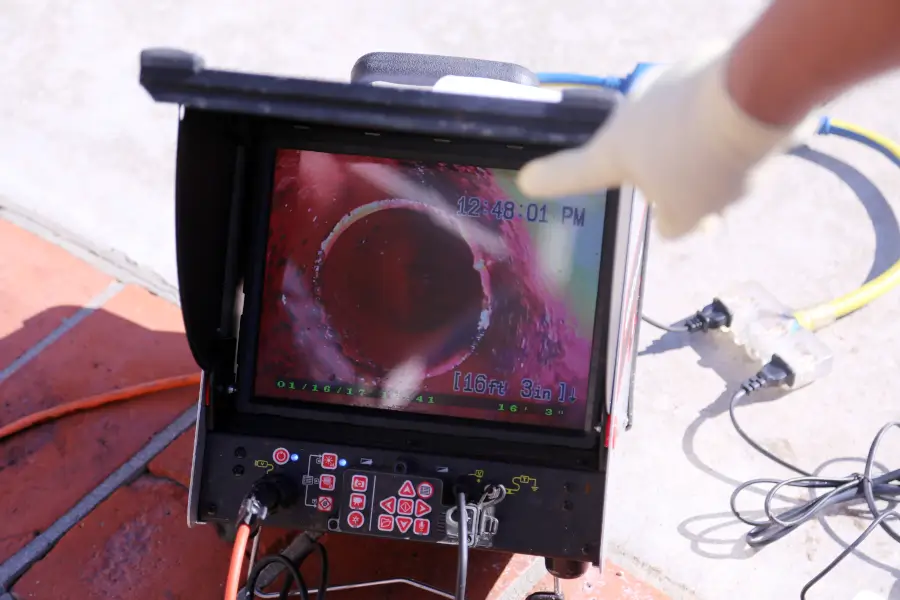
The distance counter turns an opinion into a documented location.
Sewer Line Inspection Cost
In the Columbia area, sewer line inspection cost for a standard residential scope with an accessible cleanout typically runs 150 to 500 dollars, and you get our exact price when you book, before the truck rolls. The variables are simple: length of the run, the access situation, and whether the line needs clearing before the camera can see. A commercial sewer camera inspection prices by scope, since more line and more segments mean more camera time, and the quote comes the same way, up front.
Two cost notes worth knowing. If the camera work rides along with another scheduled service, ask about bundling, because an add-on inspection during a cleaning visit is the cheapest scope you will ever buy. And whatever the final sewer line inspection cost comes to, weigh it against what it prevents: this is the fee that keeps you from paying for the wrong repair, and the comment story above is what the alternative looks like.
Make the First Inspection Your Baseline
Here is the move experienced property owners make: treat your first recorded scope as the baseline, not a one time event. A baseline recording shows your line’s condition on a known date, with the distance counter mapping every joint and imperfection. Years later, when a drain slows or a buyer’s inspector raises an eyebrow, the comparison answers instantly whether anything actually changed. What to expect in a sewer camera inspection down the road gets easier too, because the technician runs the line already knowing where the old soft spots were.
Baselines pay in every direction. Sellers attach them to disclosures and close objections before they open. Landlords file them between tenants and turn damage disputes into replays. Homeowners buying an older place fold the sewer line inspection cost into closing and start ownership knowing exactly what is under the yard. And for anyone who just finished a repair, the verification footage IS the baseline, which means the next inspection has something honest to be measured against. One recording, working for you for years: that is what to expect in a sewer camera inspection that was done properly and kept.
Ready to See What Your Line Is Hiding?
Now you know what to expect in a sewer camera inspection: a fast, clean, recorded look at the one part of your property nobody can eyeball, with findings you watch live and footage you keep. Whether it is a plumber near you for a stubborn home drain or documentation for a commercial property, the camera answers in an hour what guesswork argues about for months.
Plumb Time Plumbing and Drain Services has run these inspections across Columbia, West Columbia, and the Midlands for over 28 years, with Master Plumber Manny Anderson standing behind every one. Serious plumbing problems deserve that experience. Contact our team today to schedule your sewer camera inspection, and let the pipe tell you the truth.
One hour, one recording, zero guesswork. That is what to expect in a sewer camera inspection done right.
Sewer Camera Inspection Visits, Question by Question
These are the questions we hear when homeowners and property managers want to know what to expect in a sewer camera inspection before booking one. If yours is missing, call (803) 988-9202 and ask it straight out.
How should I prepare for a sewer camera inspection?
Very little preparation is needed. Know where your drains have been acting up, clear a path to your cleanout if you know where it is, and hold off on chemical drain openers before the visit. We handle the rest, including finding the access point if you have no idea where your cleanout hides.
Do I need to be home for the inspection?
For outdoor cleanout access, not strictly, but we recommend it, because watching the live feed and hearing the findings in real time is most of the value. If access requires going through the house or pulling a toilet, someone does need to be there. Either way, the recording reaches you.
What affects the sewer line inspection cost?
Three things move the number: the length of the run, the access situation, and whether the line must be cleared before the camera can see. A blocked line needs clearing first, which is separate work. With an accessible cleanout, most Columbia area homes land in the 150 to 500 dollar range, quoted exactly up front.
Will the inspection make a mess in my home or yard?
No. The camera enters through an existing opening, travels inside the pipe, and comes back out the way it went in. There is no digging, no wall cutting, and no cleanup left behind. If we pull a toilet for access, it gets reset with a new seal, and the bathroom looks the way we found it.
What is the difference between a residential and commercial sewer camera inspection?
Scale, mostly. A residential sewer camera inspection covers one lateral and usually finishes within an hour. Commercial properties have longer runs, more branches, and heavier use, so the camera covers more segments and the documentation often serves owners, tenants, and insurers, not just a repair decision.
What if the camera cannot get through my line?
Then the blockage itself becomes the first finding. A fully blocked line gets cleared before the inspection continues, since the camera needs a path to see. If the obstruction turns out to be a collapse rather than a clog, the camera documents exactly where the line failed, which is what a repair quote needs.
Can I use the inspection footage for insurance or a dispute?
Yes, that is one of its best uses. The recording carries an on-screen distance counter and timestamps, insurers routinely request it for claims, and it documents pipe condition for real estate disclosures, landlord files, and contractor disputes. When a repair is challenged, footage beats memory every time.
I have hired 3 plumbers (2) dug under my foundation & the first one Replaced Thé cast iron And said it was fixed. Water would stand in the Cast iron pipe in the middle part of the house and with in a year it was stopped up again with the new pipe. Plumber #2 dug under Thé house to discover the first plumber didn’t and brace the Pipe he Replaced. Within a few months, it was stopped up again. Plumber #3 wouldn’t dig instead broke through the foundation in 2 different rooms & cut out the new pipe & replaced it & had subcontractors fill the hole & were about to fill with cement when we insisted on seeing through the pipe through the camera to discover water was still collecting in the same area. When they force water through it comes out the other side. My husband is going to have a heart attack. Please advise. All 3 ran camera through; please send me some suggestions.
Need someone in area Cuthbert ga