📅 Updated August 6, 2026
Key Takeaways
- The five main types of water heaters are storage tank, tankless, heat pump, condensing, and solar, and each one wins in a different situation.
- Storage tanks cost the least upfront, while tankless units last the longest and free up floor space.
- A tank vs tankless water heater decision usually hinges on how many fixtures run hot water at the same time.
- A heat pump water heater is the cheapest electric option to run and fits South Carolina garages and utility rooms well.
- The gas vs electric water heater question is mostly settled by what your house already has plumbed and wired.
- Knowing how to choose a water heater comes down to seven factors: demand, fuel, efficiency, space, budget, the old unit, and timing.
- Columbia water is moderately hard, and sediment shortens the life of every one of these types of water heaters unless the tank gets flushed.
The five main types of water heaters are storage tank, tankless, heat pump, condensing, and solar, and the best one for your home comes down to household size, fuel supply, available space, and budget. Storage tanks win on upfront price, tankless units win on lifespan and space, and heat pumps win on operating cost. This guide compares all five types of water heaters side by side, walks through the tank or tankless decision, weighs gas against electric, and gives you the seven factors that settle the choice for most Columbia SC homes.
Why Picking the Right Type Matters
Most homeowners think about this appliance exactly twice: the day it fails and the day the new one goes in. That is the worst possible moment to compare types of water heaters, because a cold shower pushes people into a like-for-like swap even when a different unit would serve the house better for the next decade.
A little homework before the old unit quits pays off for years. The unit you pick determines your power bill, how many showers can run at once, and how much floor space you give up. If your current tank is already on borrowed time, our water heater installation and repair team can handle the swap, and the sections below compare the types of water heaters point by point so you can ask the right questions first.
The good news is that the field sorts itself quickly. Rule out the types of water heaters your fuel, space, and household size eliminate, and most homes are left choosing between two finalists.
The 5 Types of Water Heaters Explained
Every unit on this list does the same job with different tradeoffs. Some heat water and hold it, some heat it the instant you call for it, and some borrow warmth that already exists in the room. Here are the five types of water heaters you will find in Columbia area homes, starting with the one in most of them.
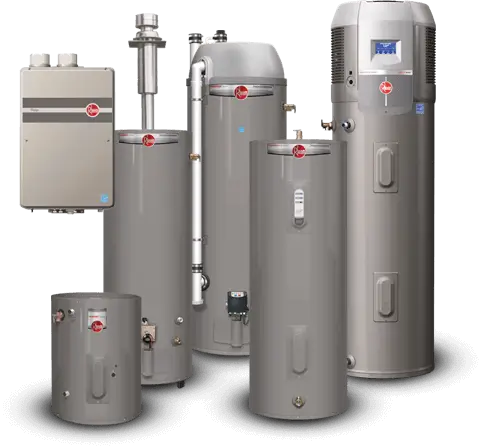
All the major types of water heaters in one family photo, from compact and full-size tanks to a wall-hung unit and a heat pump water heater on the right.
Storage Tank Water Heaters
Among all types of water heaters, the storage tank is still the one we install most. A cylinder holding 30 to 80 gallons keeps water hot around the clock so it is ready when you open a tap. Tanks are the least expensive to buy, the simplest to repair, and they run on electricity, natural gas, or propane.
The tradeoffs are real. A tank loses heat while it sits, can be emptied by a long run of showers, claims a chunk of floor space, and has the shortest service life of the group. Sediment control and anode rod care stretch that life considerably, and our guide on how long a hot water heater really lasts covers exactly when repair stops making sense. For a single distant bathroom, a small point-of-use tank under the sink can spare you a long wait for hot water.
Sizing a tank is about recovery as much as capacity. Two units can both hold 50 gallons while one reheats far faster, which is why the first-hour rating on the yellow label tells you more than the gallon number alone. When customers compare types of water heaters over the phone, this is the spec we point them to first, because it predicts whether the fourth shower of the morning runs warm.
Tankless Water Heaters
A tankless unit heats water only when a fixture calls for it, which is why it is also sold as an on-demand unit. Water passes over a powerful heat exchanger and comes out hot for as long as the tap runs. There is no stored water to keep warm, no standby loss, and no cylinder eating floor space, because the unit hangs on a wall.
Of the five types of water heaters here, tankless lasts the longest, often past twenty years with periodic descaling. The honest limit is flow. Each unit is rated in gallons per minute, and it will deliver endless hot water only up to that rating, so a house that runs three showers at once needs a unit sized for that reality. Upfront cost also runs well above a basic tank, and gas models may need a larger fuel line than the old tank used.
One honest maintenance note for this format: the same minerals that drop sediment in a tank build scale inside a tankless heat exchanger. Of all the types of water heaters, this is the one where a yearly descaling flush most directly protects the performance you paid for, because scale quietly chokes the flow rating a little at a time.
Heat Pump Water Heaters
A heat pump water heater, also sold as a hybrid electric model, moves heat instead of making it. A small compressor on top pulls warmth out of the surrounding air and transfers it into the tank, which is why it uses far less electricity than a standard electric tank doing the same work.
ENERGY STAR guidance for the heat pump water heater calls for an interior space that stays between 40 and 90 degrees Fahrenheit year-round with about 1,000 cubic feet of air around the unit. A Columbia garage or utility room sits in that range nearly all year, which makes this one of the best matched types of water heaters for the Midlands. As a bonus, a heat pump water heater cools and dries the air around it a little, something a South Carolina garage rarely complains about. Tight closets, on the other hand, are a poor fit.
Condensing Water Heaters
A condensing unit is built for homes that heat with natural gas. It looks like a familiar tank, commonly around 55 gallons, but it captures the hot exhaust gases a standard gas model sends up the flue and runs them through a second coil to add more heat to the water. Less heat wasted means more efficiency from the same fuel. Among gas-fired types of water heaters, condensing models are the efficiency leaders, though they need a condensate drain and cost more upfront than a standard tank.
Solar Water Heaters
A solar system uses rooftop collectors to do most of the heating, with an electric element as backup for cloudy stretches. South Carolina sun gives these systems plenty to work with, and operating cost after installation is the lowest of any option. The catch is the highest upfront price on this page and a payback measured in many years, so solar suits owners planning decades ahead with good roof exposure.
Those are the five types of water heaters this guide promised, and every one of them earns its place somewhere. The table below puts the differences in one view before we tackle the two questions homeowners ask most.
You may also hear a few variation names while you shop. Power vent and direct vent describe how a gas tank exhausts, not a separate category, and point-of-use describes size and placement rather than a new technology. Sales floors sometimes present these as extra types of water heaters, but every one of them is a variation on the five above.
Not Sure Which of These Types of Water Heaters Fits Your Home?
Tanya answers the phone, and Manny has installed every unit on this page. Get a straight recommendation and an exact price in writing before any work begins.
Tank vs Tankless Water Heater: The Choice Most Columbia Homes Face
Both formats are top sellers among the types of water heaters above, so this is the matchup that decides most replacements. The deciding question is simultaneous demand. A properly sized tank shrugs off the morning rush because 50 gallons of hot water are already sitting there, then makes you wait while it recovers. A tankless unit never runs out, but it caps how much can flow hot at one moment.
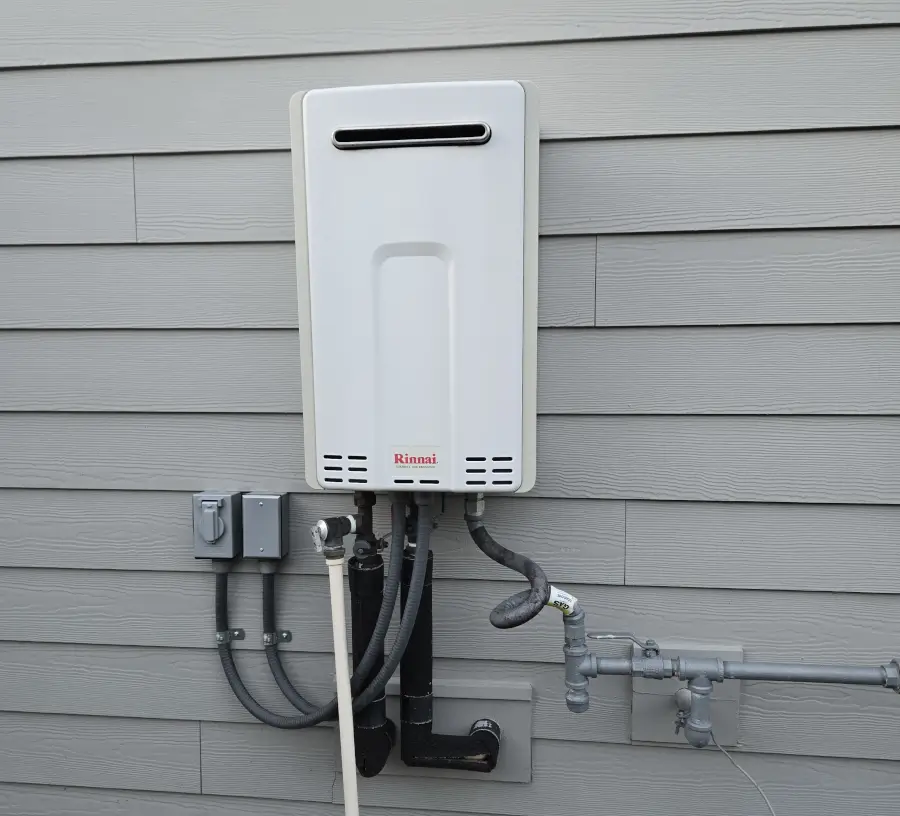
A tank vs tankless water heater comparison in one photo: this wall-hung unit on one of our jobs occupies zero floor space and vents straight through the wall.
Money frames the rest of the tank vs tankless water heater question. The tank wins the day of purchase, and the tankless unit spends the next two decades winning it back through lower operating cost and a service life roughly double that of a tank. If you plan to move in three years, that math favors the tank. If this is the house you are staying in, the wall-hung unit usually earns its keep.
The last piece is infrastructure. Gas tankless models often need a larger gas line than the tank they replace, and electric ones draw serious amperage, so the swap is more than unbolting one and hanging the other. That is exactly the kind of thing we check before quoting, so the price you see in writing is the whole price.
One myth worth retiring: endless hot water does not mean unlimited hot water. A tankless unit sized to the house delivers on its promise, and one sized to a price point becomes the lukewarm shower somebody complains about every winter. Sizing done right is the difference between loving and regretting either of these types of water heaters.
Gas vs Electric Water Heater: What Your Fuel Changes
Fuel is usually decided before you ever shop, because the answer is sitting in your utility room. If natural gas already serves the house, staying with it means faster recovery, cheaper operation in most months, and the option of a condensing unit. If the house is all electric, a standard electric tank is the simple play and a heat pump upgrade is the smart one.
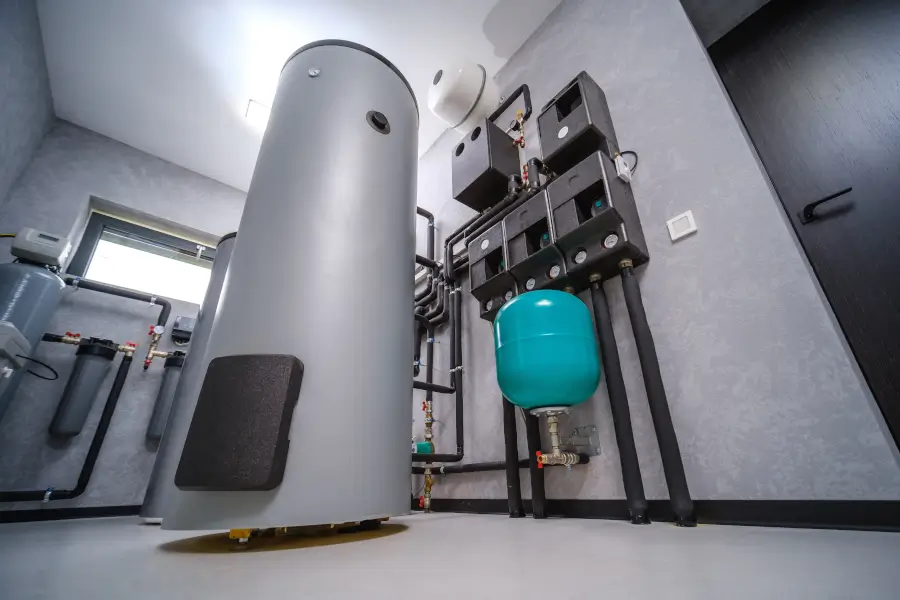
The gas vs electric water heater question also decides the plumbing around the unit: venting, combustion air, and expansion control all follow the fuel.
Switching fuels mid-stream is possible but it changes the scope. Going from electric to gas adds venting and a properly sized fuel line, while going the other way means new wiring and often a panel check. Fuel switches that involve running or resizing a gas line are handled under Manny’s Master Gas Fitter license, so the whole job stays in one set of hands from permit to startup.
Operating cost rounds out the fuel picture. Natural gas usually heats a gallon cheaper than standard electric resistance, while a heat pump flips that math back in electricity’s favor. Run the numbers on your own utility rates before assuming, because the cheapest of the types of water heaters to buy is rarely the cheapest one to own.
How to Choose a Water Heater: 7 Factors That Settle It
Comparing types of water heaters gets much easier once you score your own house first. Here is how to choose a water heater in seven factors, the same list we walk through with customers on the phone.
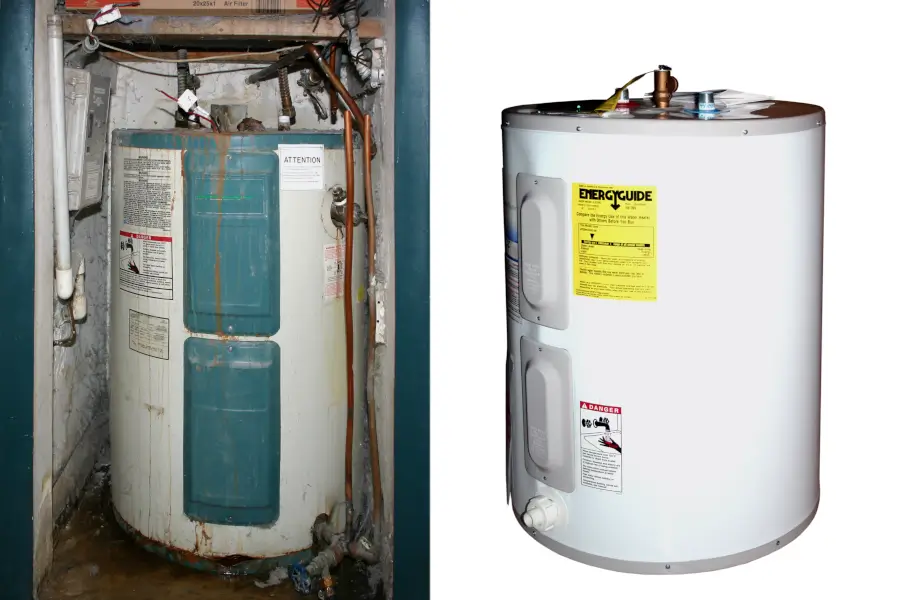
Replacement day is when the types of water heaters conversation gets real: the rusted survivor on the left, its energy-rated successor on the right.
1. Household demand. Count people, bathrooms, and the busiest hour of your week. Two showers, a dishwasher, and a laundry load overlapping is the test your unit has to pass. Tanks are sized by gallons and first-hour output, tankless by gallons per minute, and getting this number right matters more than the brand on the box.
2. Fuel supply. What the house already has plumbed and wired is the cheapest path. Some types of water heaters only make sense with a particular fuel, condensing units with gas being the clearest example, so your utility hookups narrow the field before preferences enter into it.
3. Efficiency. Every unit carries a Uniform Energy Factor rating, and a higher number means less energy per gallon of hot water. Efficiency is where a pricier unit quietly repays you, because the purchase happens once and the power bill happens every month for a decade or two.
4. Space. Different types of water heaters claim space differently: a tank needs floor area and clearance, a tankless unit needs wall space and vent routing, and a heat pump needs air volume around it. Measure the spot before you fall for a unit that will not live there comfortably.
5. Budget, both of them. There is the price on install day and the cost of every month after. As a rule of thumb in a tank vs tankless water heater decision, the tankless install runs roughly two to three times a like-for-like tank swap, then claws it back over a much longer life. Either way, the exact price is quoted in writing before any work begins.
6. The old unit. Ask who hauls off the dead one. Disposal is included when we handle the swap, but it is worth confirming with any company you call, because a drained 50 gallon tank is not something you want living in your garage.
7. Timing. A planned replacement installs in a single calm visit. A failed unit means choosing under pressure with cold water in the pipes. If your tank is past ten years old or rumbling when it heats, start this conversation now, while every one of these types of water heaters is still on the table.
Matching Types of Water Heaters to Columbia SC Homes
Local conditions tilt the scales. Columbia water arrives moderately hard, and minerals fall out of it wherever water sits hot, which is exactly what a tank does all day. When we flush a tank that has run for years on Columbia water, the first bucket comes out cloudy with pale grit before the drain runs clear, and that same sediment layer is what makes an electric element sizzle and a gas burner rumble.
That is why maintenance habits matter as much as the model here. Our guides on hard water vs soft water and draining your water heater cover the two habits that protect whichever unit you pick. Tankless owners are not exempt, since the same minerals scale the heat exchanger and periodic descaling keeps the flow rating honest.
Two more local notes. Our mild winters mean garages and utility rooms stay in the operating range a heat pump needs, so the types of water heaters that struggle up north thrive here. And replacement work in this area is permitted work, which we cover in plain language in our guide to Columbia water heater permits and code requirements. The permit is part of the job when we do it, not a surprise line item.
Placement is the last local wrinkle. Plenty of Midlands homes keep the unit in an interior closet or a crawl space, and both spots limit which types of water heaters fit. A closet rules out most heat pumps for lack of air volume, and a crawl space install adds a pan, a drain path, and access questions worth settling before purchase, not after.
Pick the Type, Then Get It Installed Right
Knowing how to choose a water heater gets you most of the way, and the installation carries you the rest. All five types of water heaters on this page hit the life span on their brochure only when the venting, expansion control, pan and drain, fuel sizing, and permit are handled right. That is what a veteran owned local shop with over 28 years in the trade brings to the table, and it is why the quote arrives in writing before a wrench comes off the truck.
Talk Through Your Options With a Master Plumber
Call Plumb Time and tell Tanya what your household looks like. You will get an honest recommendation, a clear price in writing, and a unit matched to your home instead of whatever is on the truck.
Water Heater Types: Frequently Asked Questions
These are the questions Columbia homeowners ask most when comparing types of water heaters. If yours is not on the list, call the shop and ask. Tanya picks up, and the answer costs nothing.
What are the five main types of water heaters?
The five main types of water heaters are storage tank, tankless, heat pump, condensing, and solar. Storage tanks are the most common in Columbia homes, tankless units heat water on demand, heat pumps move warmth out of the air, condensing models reuse exhaust heat, and solar systems use rooftop collectors.
Is a tankless unit worth it for a Columbia home?
Yes, for many homes. The tank vs tankless water heater math favors tankless when you plan to stay ten years or more, since the longer service life and lower operating cost repay the higher install price. Large families running several showers at once may still be happier with a properly sized tank.
Which type of water heater is cheapest to run?
A heat pump water heater costs the least to operate among electric options because it moves existing heat instead of generating it. Among gas models, condensing units lead on efficiency. Standard electric tanks sit at the expensive end, which is why so many replacements in this area move away from them.
What size water heater does a family of four need?
Most families of four do well with a 50 gallon tank or a tankless unit rated near 7 gallons per minute. The real sizing test is your busiest hour, with two showers, a dishwasher, and laundry overlapping. We size types of water heaters to that peak instead of the average, so nobody draws the cold straw.
Do heat pump water heaters work well in South Carolina?
Yes. A heat pump water heater thrives in our climate because it feeds on warm air, and a Columbia garage or utility room stays in its operating range most of the year. It also dries the air around it a little, which garages here can use. It does need room to breathe, so tight closets are a poor fit.
Can I switch from an electric water heater to gas?
Yes, if natural gas or propane already serves the property. The gas vs electric water heater switch adds venting and a properly sized fuel line, so it costs more than a like-for-like swap. Permits apply in the Columbia area either way, and the exact price is quoted in writing before any work begins.
How long does replacing a water heater take?
Most types of water heaters install in a single visit. A straight tank-for-tank swap usually wraps up in a few hours, while converting to tankless runs longer because of wall mounting, venting, and fuel line work. Planning the swap before the old unit quits is what keeps the whole process painless.