📅 Updated August 6, 2026
Key Takeaways
- Knowing when to replace sewer line pipe comes down to seven warning signs, and most of them show up long before sewage ever backs up into the house.
- A broken sewer line does not raise your water bill. That is a supply side symptom, and sorting the two saves homeowners from chasing the wrong pipe.
- No one should authorize digging without camera footage first, because the video decides whether to repair the pipe or replace sewer line sections outright.
- Trenchless sewer repair can reline or burst-and-replace a line without trenching the whole yard, but only when the pipe qualifies for it.
- Sewer line lifespan depends on material: clay tile and cast iron lines from older Columbia neighborhoods are reaching the end of their working lives now.
- Typical sewer line replacement cost runs a few thousand dollars for short, shallow runs to twenty thousand or more for long, deep, or paved-over lines.
- Columbia clay soil and mature hardwood roots are hard on buried pipe, which is why local lines often fail at the joints first.
Knowing when to replace sewer line pipe in South Carolina comes down to seven warning signs, one honest camera inspection, and a clear look at your options before anyone picks up a shovel. Some failing lines can be repaired in place or relined without trenching the yard, while others have earned a full replacement. This guide covers the signs of a broken sewer line, sewer line lifespan by material, how the camera settles whether to repair or replace sewer line pipe, and what the work typically costs in the Columbia area.
How a Sewer Line Fails, and One Myth to Retire
Your sewer line is a gravity drain. It carries wastewater from every fixture in the house downhill to the city main or septic tank, with no pump and no pressure, which means it fails quietly. Joints separate, roots find the seams, soil shifts the slope, and the pipe keeps limping along until the symptoms finally reach the surface.
Here is the myth worth retiring, because the old version of this very article repeated it: a broken sewer line does not raise your water bill. Your meter measures water coming into the house, and the sewer line only carries water leaving it. If your bill is climbing without a habit change, look for a supply side problem like the ones in our guide to handling a plumbing leak. A failing sewer line announces itself in other ways, and those are the seven below.
7 Warning Signs It Is Time to Replace Sewer Line Pipe
No single sign on this list proves the line is done. Two or three of them together, in a house with an older line, is the pattern that decides when to replace sewer line pipe instead of treating symptoms. Here are the seven, in roughly the order homeowners notice them.
1. Clogs That Keep Coming Back in More Than One Fixture
A clog that lives in one drain is a fixture problem. Clogs that rotate through the house, cleared one week and back the next, point below all of them, at the one pipe every fixture shares. If professional drain cleaning keeps buying you shorter and shorter stretches of relief, the recurring blockage is a symptom, and the broken sewer line underneath it is the disease.
2. Gurgling Fixtures
A healthy drain system moves air as smoothly as it moves water. When a sewer line is partially blocked or collapsed, trapped air gets pushed backward through the water in your traps, and you hear it: the toilet bubbles when the washing machine drains, or the tub gurgles when a toilet flushes. Fixtures talking to each other is one of the earliest and most reliable signs of a broken sewer line on this list.
3. The Whole House Drains Slow at Once
One slow sink is a clog. Every drain in the house running slow at the same time is a line problem, because the only thing all those fixtures share is the pipe under the yard. This is the sign homeowners most often try to solve one drain at a time, which is treating seven symptoms of one broken sewer line and missing the single cause.
4. Soggy Patches or Suspiciously Green Stripes in the Yard
A broken sewer line leaks its contents into the soil around it, and the lawn responds. Watch for a wet, spongy patch that never dries, or a stripe of grass growing greener and faster than everything around it for no reason you can name. Both tend to trace the path of the line itself, which is why we often ask homeowners to walk the yard before we ever unload equipment.
5. Sewer Odor Outside
An intact sewer line is a sealed system from the house to the main, so you should never smell it in the yard. A persistent rotten egg or musty sewage odor outdoors, strongest near the line’s path or after heavy rain, means wastewater is escaping somewhere it should not. The smell also invites pests, so a sudden uptick in flies and rodents around one part of the yard can be the same sign wearing a different coat.
6. Pest Pressure and Shifting Ground Around the Foundation
Long-running leaks change the ground itself. Soil saturated by a broken sewer line can settle unevenly, leaving depressions in the yard, pavers that sink, or in serious cases movement near the foundation. None of this happens overnight, which is exactly the argument for acting on the earlier signs before the repair bill grows a landscaping and concrete chapter.
7. Sewage Backing Up Into the House
This is the sign that settles the argument. When wastewater comes up a floor drain, a tub, or the lowest toilet in the house, the line below is blocked or has failed outright. Our guide on how to clear a main sewer line clog covers what to do in the moment, but when backups repeat, clearing them is a bandage. Repeat backups are the strongest case on this list to replace sewer line pipe rather than keep renting relief.
While you wait for that verdict, three habits limit the damage. Ease up on water use, especially laundry, since everything you send down has to get past the problem. Learn where your cleanout is, because that white capped pipe in the yard is where relief and inspection both start. And skip the chemical drain products, which do nothing for a line problem except make the eventual work less pleasant for everyone.
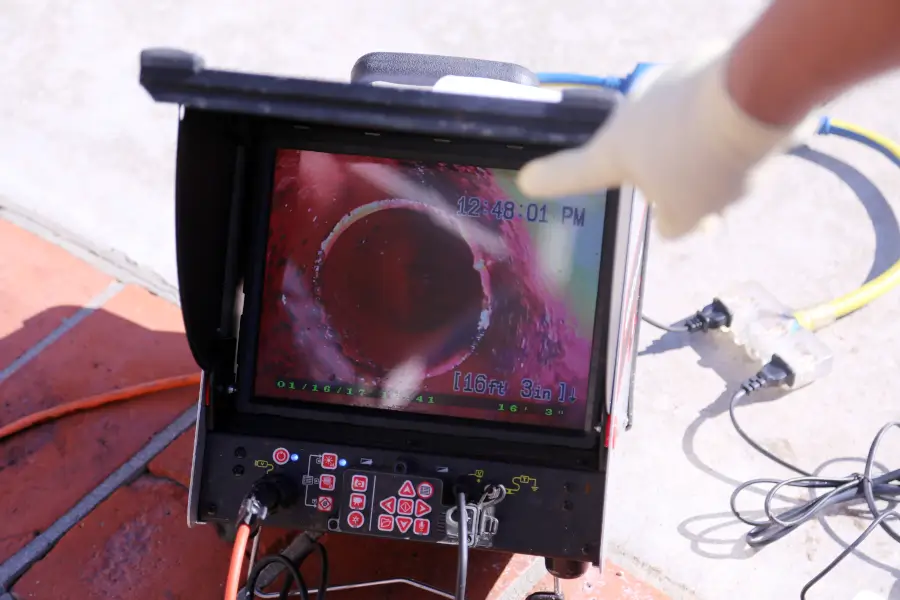
A broken sewer line has nowhere to hide on camera: the monitor marks the exact distance to the damage before a single shovel moves.
Camera First: Nobody Should Guess With a Shovel
Every sign above is circumstantial evidence. The camera is the trial. A sewer camera inspection runs a lens through the line and shows exactly what is wrong, where, and how bad, with a distance counter marking the spot from the cleanout. That counter is the difference between a three foot digging window over the actual break and a thirty foot trench dug on a hunch, and it is why nobody should replace sewer line pipe without it.
The footage also protects you from the opposite mistake: treating a partly broken sewer line as a dead one and replacing what only needed a repair. Roots at a single joint, one offset section, or a localized break can often be handled without touching the rest of the run. In the Columbia area a camera inspection typically runs $150 to $500, which makes it the cheapest decision insurance available on a job that can cost a hundred times that. Get the footage, keep a copy, and make every decision from it.
A proper inspection ends with more than a verdict. You should receive the recording itself, the distance readings to each finding, and plain language about what was seen: roots, offsets, bellies, cracks, or collapse. That package is yours. It travels with you to any second opinion, and it becomes the before picture that proves the repair worked when the camera goes back in afterward.
Repair, Line, Burst, or Dig: Your Four Options
When the camera confirms real damage, the decision is not simply replace or ignore. There are four paths between clearing a broken sewer line and the decision to replace sewer line pipe entirely, and the right one depends on what the footage shows, how the pipe was built, and what sits above it.
Spot repair. When damage is confined to one section, the fix is a targeted dig over that point and a replacement of just those feet of pipe. It is the least expensive path and the reason the camera’s distance counter matters so much: precision is what keeps a repair from turning into a premature call to replace sewer line pipe that had years left in it.
Pipe lining. Cured-in-place lining threads a resin soaked sleeve through the existing pipe and hardens it into a new pipe inside the old one. It is a form of trenchless sewer repair that works when the host pipe still holds its shape, and it turns a week of excavation into a day of access pits.
Pipe bursting. The other trenchless sewer repair method pulls a bursting head through the old line, shattering it outward while dragging brand new pipe into the same path. Unlike lining, bursting replaces the pipe entirely, which makes it the trenchless answer when the old line is too far gone to line, and it often beats open trench on total sewer line replacement cost once surface restoration is counted.
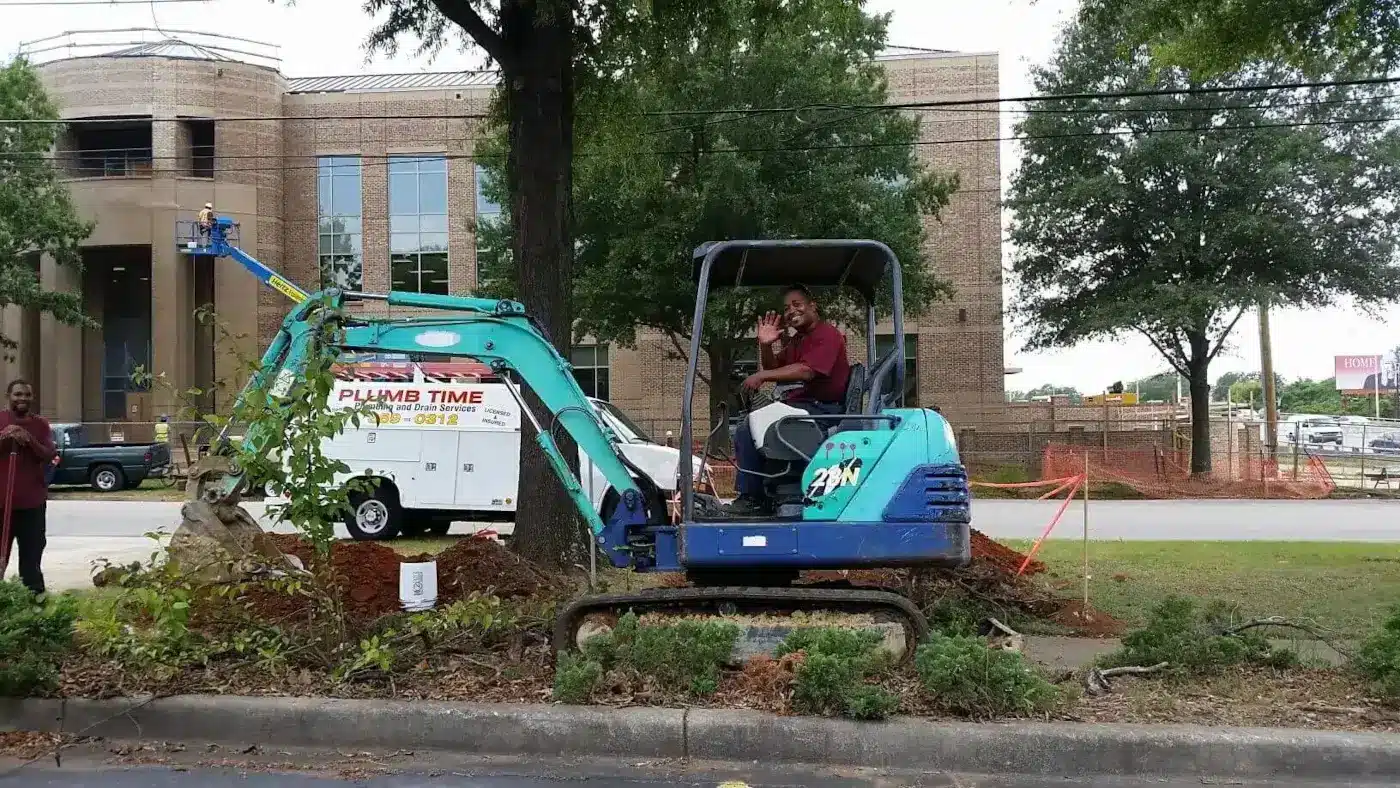
Open trench replacement. Sometimes the honest answer is the excavator. A collapsed line, a pipe with a sag that lining would only preserve, or a run with bad slope needs to come out of the ground and be rebuilt to grade. The trenchless technology reference at NASTT is a good plain look at what the no-dig methods can and cannot do, and that cannot list is why trenchless sewer repair is never the whole menu and the excavator still earns its keep.
The pattern worth noticing: trenchless sewer repair is a qualification, not a preference. The pipe has to earn it on camera. Any company that promises a method before seeing footage has chosen their equipment, not your answer.
Not Sure If Your Line Needs Repair or Replacement?
Start with the camera, not the excavator. Call Plumb Time, get the footage, and make the decision with your own eyes on the evidence.
Sewer Line Lifespan by Material
Sewer line lifespan is mostly a question of what the pipe is made of, and in Columbia that maps neatly to when the neighborhood was built. The table below covers the three materials we see most under local yards, and how each one typically gives out.
The takeaway on sewer line lifespan is generational. Homes built before the 1970s in this area mostly drain through clay tile or cast iron, and both materials are aging past their design lives right now. If your home is from that era and the line has never been replaced, sewer line lifespan is not a theoretical topic, and the seven signs above deserve a lower threshold of suspicion.
Not sure what is under your yard? The house’s age is the first clue, and the cleanout is the second, since the pipe material visible there often matches the run. County permit records sometimes tell the story, but twenty minutes of camera time answers it beyond argument, along with every other question in this guide.
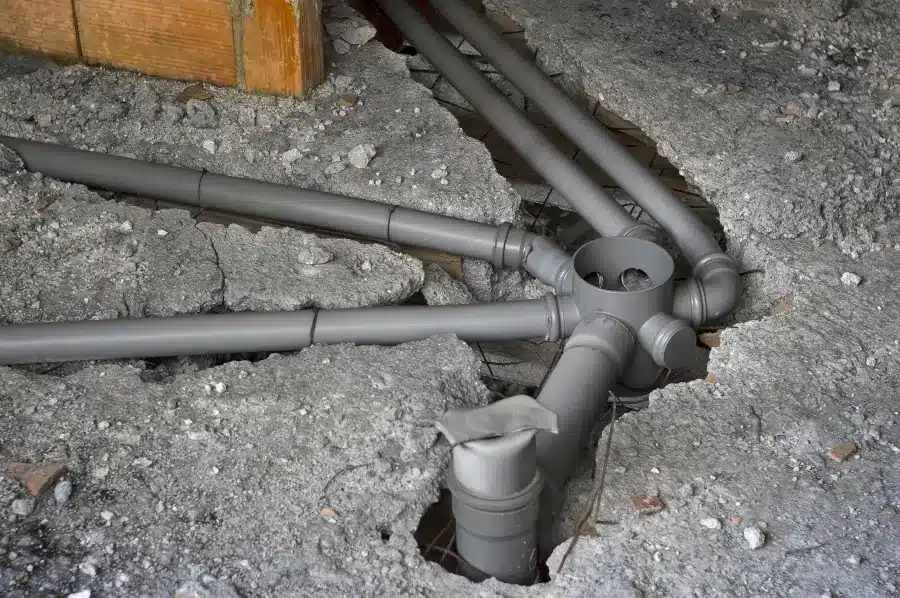
Where the sewer line replacement cost goes: new PVC set to proper grade and bedded right, so the next owner never thinks about it.
Sewer Line Replacement Cost in the Columbia Area
The sewer line replacement cost question has honest national brackets: most residential jobs land between $3,000 and $20,000, with complex projects running beyond that. Per foot, traditional open trench work generally lands between $50 and $250, and trenchless methods between $60 and $250, with lining at the higher end of that band. The Columbia market typically prices in the lower to middle portion of those national ranges, which is one of the quieter perks of living here.
What moves sewer line replacement cost is not mystery, it is five factors: how long the run is, how deep it sits, what is on the surface above it, what the new pipe ties into at the street, and how much restoration follows the work. A shallow line under open grass is one job. When you replace sewer line pipe under a driveway, six feet down, with a city tie-in, that is a different one. That spread is exactly why we put eyes on the line before quoting anything.
Restoration deserves its own line of budget honesty. Concrete cut for a driveway gets repoured, sidewalk panels in the city right of way come with their own rules, and a trench across an established lawn needs soil, seed, and a season. Good quotes name these items instead of letting them surprise you afterward, and trenchless methods earn much of their keep by shrinking this exact list.
Two promises hold wherever the sewer line replacement cost lands. The camera comes first, so you are paying to fix what is proven rather than suspected. And the exact price is quoted in writing before any work begins, so the figure you approve is the figure you pay.
Why Columbia Is Hard on Buried Sewer Lines
Local conditions shorten the schedule. Midlands clay soil swells when soaked and shrinks hard in dry stretches, and that seasonal movement is how many a broken sewer line got that way, one worked joint at a time. Meanwhile the mature oaks and other hardwoods that make older Columbia neighborhoods worth living in send roots hunting for exactly the moisture a seeping joint provides. Clay pipe joints every few feet give them plenty of doors to knock on.
Jurisdiction adds one more local wrinkle. Columbia, West Columbia, Cayce, and the surrounding utility districts each handle sewer taps, permits, and inspections their own way, and the rules at the property line differ from the rules at the main. A crew that works these systems weekly knows which office to call before the first shovel, which is the difference between a smooth tie-in and a stalled one.
Housing age finishes the picture. The materials in the table above went into the ground in waves, so whole streets tend to reach the end of sewer line lifespan together. When two or three neighbors on one block have had line work done, that is not coincidence, it is the construction calendar coming due. Whole blocks replace sewer line pipe in the same decade for the same reason, and a camera look now beats learning it the messy way.
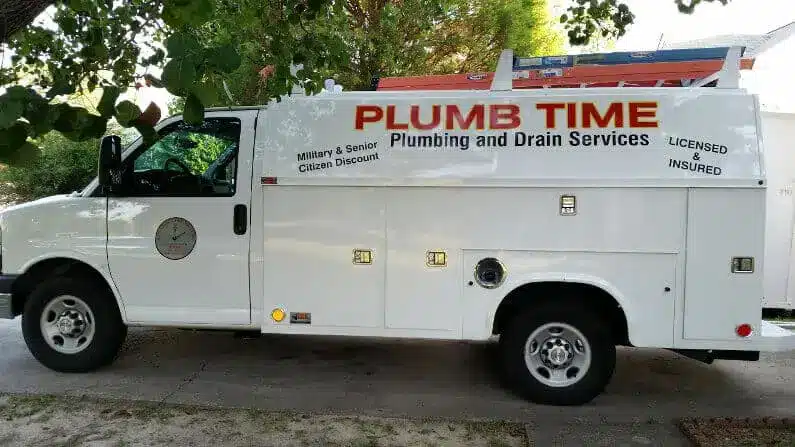
When it is time to replace sewer line pipe in the Midlands, the crew that shows up is local, licensed, and has opened this ground before.
Get the Footage, Then Decide
The decision to replace sewer line pipe is too expensive to make on symptoms alone and too important to postpone once the evidence is in. Watch for the seven signs, put a camera on the line when they cluster, and weigh all four options against what the footage shows. If roots are the whole story, clearing them with hydro jetting and rechecking on camera may buy the line years. If the pipe is done, you will see that too, and whether the answer is trenchless sewer repair or open ground, you will replace sewer line pipe once, correctly, with the paperwork to prove it.
Put a Camera on It Before You Put Money in It
Over 28 years of sewer work in the Columbia area, footage you can watch yourself, and every price in writing before the first shovel. Call Plumb Time and get the honest verdict on your line.
Sewer Line Replacement: Frequently Asked Questions
These are the questions Columbia homeowners ask most once the signs stack up and the question of when to replace sewer line pipe gets real. If yours is not on the list, call the shop. Tanya answers, and the verdict on your line starts with a conversation, not a contract.
How can I tell if my sewer line is broken or just clogged?
A clog usually lives in one fixture and clears for good; a broken sewer line causes repeating clogs in several fixtures, gurgling, and slow drains across the whole house. The only sure way to tell them apart is camera footage, which shows the inside of the pipe and marks the exact trouble spot.
How long do sewer lines last in South Carolina?
Sewer line lifespan depends on material. Clay tile typically serves 50 to 60 years, cast iron 50 to 75, and modern PVC is expected to run a century. Columbia clay soil and hardwood roots push older materials toward the early end of those ranges, so pre-1970s homes are due a close look now.
How much does it cost to replace a sewer line in Columbia?
Typical sewer line replacement cost runs $3,000 to $20,000 nationally depending on length, depth, and what sits above the line, and the Columbia market usually prices below the national middle. Camera footage always comes first, and the exact price arrives in writing before any work begins.
What is trenchless sewer repair?
Trenchless sewer repair fixes or replaces a buried line through small access pits instead of a full trench. Lining hardens a new pipe inside the old one, while pipe bursting shatters the old line and pulls new pipe through the same path. The camera decides whether your pipe qualifies for either.
Can tree roots be cleared without replacing the sewer line?
Often, yes. If the camera shows roots at a joint but sound pipe around it, professional root cutting and high pressure water jetting can clear the line, and a follow-up camera pass confirms the result. Replacement enters the conversation when the roots return fast or the pipe itself is failing.
Does homeowners insurance cover a broken sewer line?
Sometimes, and the details decide it. Policies generally respond better to sudden, accidental damage than to gradual wear, root intrusion, or old age, and some carriers offer separate service line coverage. Keep your camera footage and written quotes, and put the question to your carrier directly.
Who owns the sewer line, the homeowner or the city?
In most local jurisdictions the homeowner owns and maintains the lateral, the pipe running from the house to the connection at the main, while the utility owns the main itself. Exact boundaries vary by provider, so it is worth one quick phone call to your utility before budgeting any major repair.