📅 Updated June 24, 2026
Key Takeaways
- To clean drains the right way, clear the clog mechanically first with a plunger, drain claw, or snake, then deodorize with baking soda, vinegar, and hot water, and finish by preventing the next clog with screens and better habits.
- Hair and soap scum cause most bathroom clogs, while grease and food cause most kitchen clogs, so how you clean drains depends on which drain you are dealing with.
- Skip harsh chemical drain cleaners when you can. They can corrode older pipes and rarely clear a true clog, and they are risky on a septic system.
- To clean drains, reach for baking soda and vinegar for odors and light buildup, a drain claw or snake for hair, and a flat-bottom plunger for a solid blockage.
- Drain flies are a sign of organic gunk in the pipe. Clean the drain thoroughly and the flies disappear, since you remove what they breed in.
- Call a Columbia SC plumber when several drains are slow or gurgling at once, when a clog keeps coming back, or when you smell sewer gas, since the problem is likely in the main line.
If you want to clean drains the right way, the short version is this: clear the clog first with a plunger, drain claw, or snake, then deodorize with baking soda, vinegar, and hot water, and finish by preventing the next one with drain screens and better habits. Skip the harsh chemical cleaners when you can, since they can damage pipes and rarely fix a real blockage. And if several drains slow down or gurgle at once, stop and call a plumber, because the trouble is likely in your main line, not the fixture.
I am Manny Anderson, a licensed master plumber, and our crew at Plumb Time has cleared and maintained drains across Columbia, West Columbia, and the wider Midlands for over 28 years. This guide walks through how to clean drains in every part of the house, from a slow sink to a gurgling shower to a clogged bathtub, which tools actually work, the natural methods we recommend over chemicals, how to get rid of drain flies, and the clear signs it is time to call a pro instead of fighting it yourself.
What Causes a Clogged Drain Before You Clean Drains
Before you clean drains, it helps to know what you are up against, because the cause decides how you clean drains and fix the clog. A clogged drain in a kitchen line is not the same as one that stops up a shower, and treating them the same way wastes time. Most household clogs come down to a handful of usual suspects, and where they happen tells you a lot.
| Where it clogs | Usual cause | Best first move |
|---|---|---|
| Kitchen sink | Grease, food scraps, coffee grounds | Check disposal, then plunge or clean the P-trap |
| Bathroom sink | Hair, soap scum, toothpaste buildup | Pull hair with a drain claw |
| Tub and shower | Hair and soap scum, mostly hair | Remove stopper, claw or snake the drain |
| Toilet | Too much paper, flushed objects | Flange plunger, then a toilet auger |
| Several drains at once | Main line: roots, grease, collapse | Call a plumber, not a DIY fix |
Hair is the number one culprit in the bathroom. The average person sheds around 100 strands a day, and a lot of that goes down the shower or sink, where it wraps around the stopper and the crossbars and grabs soap scum until water barely moves. In the kitchen, grease is the quiet killer. It pours in as a liquid, then cools and hardens on the pipe wall, narrowing the line a little more with every meal until food scraps catch and the sink backs up.
How to Clean Drains by Clearing the Clog: Mechanical Methods First
When a drain is already blocked, the right way to clean drains is to physically move the clog first, not pour something on it and hope. Mechanical methods clear the actual blockage, and they do it without the pipe damage that comes with strong chemicals. Work through these in order to clean drains the right way, from the simplest method to the most involved.
Pull the hair out by hand or with a drain claw
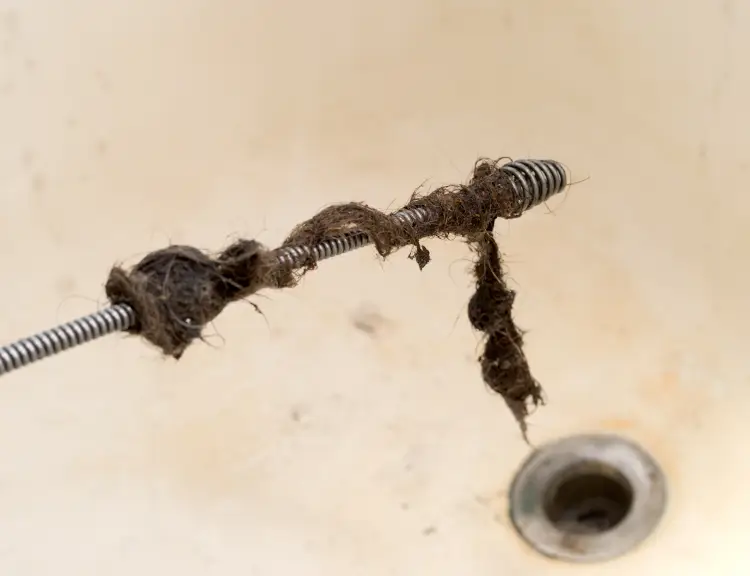
For a tub, shower, or bathroom sink, start here to clean drains fast, because hair near the opening is the most common blockage and the easiest to fix. Remove the stopper or strainer first. Some lift and twist off, some need a screw removed, and a trip-lever tub stopper pulls out through the overflow plate. Then slide a cheap plastic drain claw, the barbed zip-style tool, down the drain, twist, and pull. You will likely bring up a wad of hair and gunk. It is not pretty, but it clears the clog in minutes with no chemicals and no risk to the pipe.
Use the right plunger
A plunger is still one of the best tools to clean drains with a solid clog. Match the type to the job. A flat-bottom cup plunger is for sinks, tubs, and showers, while a flanged plunger is shaped for toilets. Fill the fixture with enough water to cover the plunger head, since the water is what creates the suction that pulls the clog free. Seal the plunger over the drain and pump firmly ten to fifteen times, then break the seal. On a double-bowl kitchen sink, plug the other drain first so you do not lose your seal. Repeat a few times before moving on.
Clean the P-trap
The P-trap is the curved pipe under a sink, and it catches a surprising amount of grease, coffee grounds, and debris. If plunging does not do it, this is the next stop. Put a bucket under the trap to catch the water sitting in the line, unscrew the slip nuts on both sides, and pull the trap free. Clear out whatever is packed inside, rinse it, and reassemble. To clean a sink drain that a plunger will not clear, this one job handles a large share of kitchen and bathroom clogs, and it costs nothing but a few minutes and a willingness to get your hands dirty.
Run a drain snake for deeper clogs
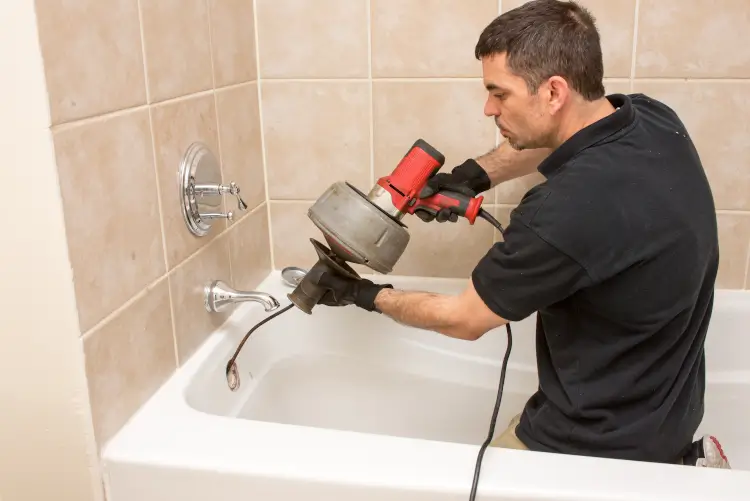
When you cannot clean drains with a plunger and the blockage is further down the line, a drain snake, also called an auger, reaches what a plunger cannot. Feed the coiled cable into the drain until you hit resistance, then turn the handle so the tip grabs or breaks up the clog, and draw it back out slowly with a bucket and rag ready for the mess. Do not force it. An aggressive push can crack a pipe or scratch a tub. On a bathtub, snake through the overflow opening, not the drain at the bottom, since the sharp bend there can damage the cable or the finish.
The Natural Way to Clean Drains and Kill Odors
Once the blockage is gone, the next step is to clean drains properly so they stay clear and stop smelling. This is where a few simple household items clean drains better than the harsh stuff. Chemical drain cleaners are corrosive, they can eat at older or metal pipes, they are a poor match for a septic system, and they often just sit on top of a clog without clearing it. The natural methods below are safer for your plumbing and the environment, and they handle the buildup and odors that cause most complaints.
Clean Drains With Baking Soda, Vinegar, and Hot Water
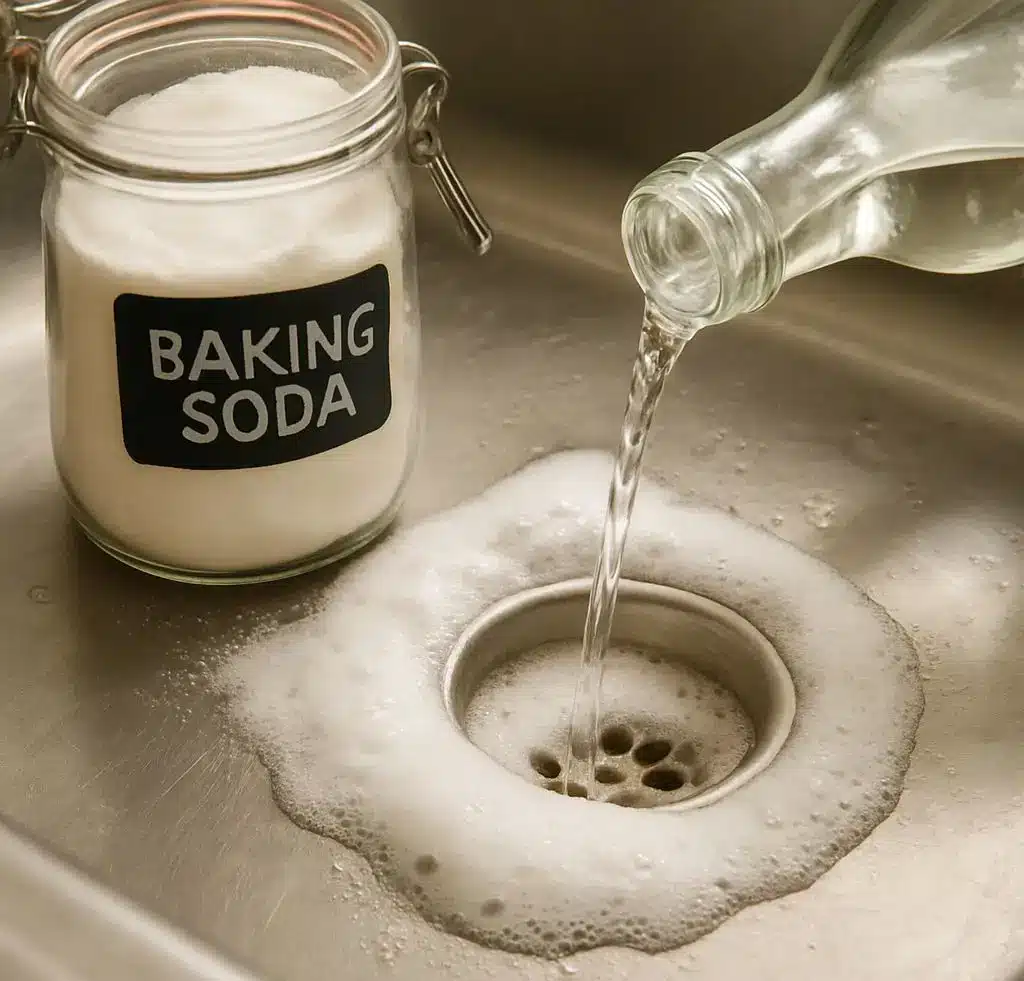
This is the classic for a reason. It breaks down grease, soap residue, and the organic film that feeds odors, and it helps head off the next clog. Pour about half a cup of baking soda down the drain, follow with half a cup of white vinegar, then cover the opening and let it foam and sit for around fifteen minutes. Finish by flushing with a kettle of boiling water. It works to clean drains at the sink and tub, and the same mix wipes down faucets and drain openings to lift mineral deposits. For a well-used kitchen or bathroom drain, doing this once a week keeps things flowing.
Enzyme and bacterial cleaners
For a deeper clean, an enzymatic or bacterial drain cleaner digs into organic buildup that scrubbing misses. Live cultures eat away grease, food, and grime over several hours, so pour them in at night and let them sit until morning. They are slow compared to a plunger, but gentle on pipes and ideal for a septic system. Names like Zep and Citra-Drain are easy to find, and the EPA guidance on septic care backs avoiding harsh chemicals on these systems. Used monthly, they keep a drain odor free and cut down on the buildup that leads to clogs.
Clean the garbage disposal
The disposal is a drain too, and to clean drains in the kitchen fully you cannot skip it, since a neglected one throws odor through the whole kitchen. If it runs fine but smells, skip the chemicals and use ice, salt, and citrus. Drop in a few cups of ice, a handful of coarse salt, and the peels of a lemon, run it for a bit, then flush with cold water. The ice and salt scour the chamber and grinders, and the lemon leaves it fresh. The ice will not hurt the grinders. Never pour chemical cleaner into a disposal, since it can degrade the seals and blades.
How to Get Rid of Drain Flies
If little moth-like flies keep showing up around a sink or tub, you have drain flies, and they are telling you something useful. Drain flies breed in the slimy organic film that builds up inside a drain and trap. They are not a hygiene failure on your part, they are a sign that gunk has collected in the pipe. The good news is that the fix is the same as cleaning the drain, so you solve two problems at once.
Start by cleaning the drain thoroughly, since the goal is to remove the film they lay eggs in. Use a drain claw or brush to scrub the inside walls and the underside of the stopper, then run the baking soda, vinegar, and boiling water flush. For a stubborn case, an enzyme cleaner left overnight breaks down the organic layer the larvae feed on.
Repeat for a few days to catch newly hatched flies, clean drains and the surrounding area, and keep things dry when you can, since they need moisture. Remove what they breed in and the flies disappear. To keep them from coming back, run hot water through the drain a few times a week and use a screen, since a dry, clean opening gives them nowhere to lay eggs. If they persist after a good cleaning, it can point to buildup deeper in the line worth having a plumber check.
When a Noisy or Gurgling Drain Means a Bigger Problem
Not every drain issue is a simple clog. Sometimes the drain is trying to warn you. A gurgle when the shower drains, or a sink and tub that bubble when you flush the toilet, points to air moving where it should not, and that often means the problem is deeper than the fixture. Here is how to read the signs before they turn into a backup.
A broken or dry P-trap
The P-trap holds a small plug of water that blocks sewer gas from rising into your home. If that trap dries out or cracks, you get a gurgle and sometimes a rotten-egg smell. Sewer gas carries methane, hydrogen sulfide, and ammonia, and ongoing exposure can cause headaches and nausea, so it is worth addressing. A simple check: slide a foot-long flexible wire into the drain, and if it comes out wet for the last several inches, the trap is holding water. A cracked trap also leaks onto the cabinet floor and can feed mold, so replace it promptly or have a plumber do it.
A blocked plumbing vent
Every drain system has vent pipes that run up through the roof to balance air pressure so water flows freely. When a vent gets blocked by leaves, a bird nest, or debris, it creates negative pressure that makes a drain act clogged even when the pipe is clear, and no amount of snaking fixes it. A blocked vent can also push sewer odor back into the house, and no attempt to clean drains will fix it until the vent is clear. Clearing a roof vent means getting on the roof safely, so this is a job to hand to a pro with the right equipment rather than tackling it yourself.
A problem in the main line
If several fixtures are slow or gurgling at the same time, the issue is almost certainly your main sewer line, not any single drain. Tree roots, grease buildup, corrosion, or a collapsed section can choke the line that carries everything to the sewer. You cannot see it from inside, but you do not have to dig either. A plumber feeds a sewer camera in through the cleanout to find the exact problem, then usually clears it with a hydro jet that blasts the line clean with high-pressure water, no harsh chemicals involved.
How to Clean Drains Less Often: Keep Them Clear for Good
The best way to clean drains is to keep them from clogging in the first place. A few small habits prevent the vast majority of the backups we get called out for, so you clean drains far less often, and they cost almost nothing. Build these into your routine and you will clean drains far less often and spend less time with a plunger in hand.
One more for kitchens with a disposal: do not overload it, and go easy on starchy and fibrous foods like pasta, rice, and potato peels, which swell and turn to paste in the line. Run cold water while the disposal works and for a few seconds after.
These habits, plus the occasional natural cleaning, are how you clean drains and keep them clear. Most homes that follow them stay clog free year round, and the few clogs that do show up clear fast because nothing has hardened in the line.
When to Call a Columbia SC Drain Cleaning Pro
Knowing how to clean drains yourself handles most everyday clogs, and learning to clean drains the right way is exactly what this guide is for. But part of doing it the right way is knowing when a job has outgrown a plunger. Calling at the right moment saves money, and knowing when you cannot clean drains yourself is part of doing it right, since a small problem caught early is far cheaper than a flooded floor. Here is when to stop and pick up the phone.
| Handle it yourself | Call a plumber |
|---|---|
| One slow drain you can clear by hand | Several drains slow or backing up at once |
| Hair or gunk near the drain opening | A clog that keeps coming back fast |
| Odor that clears after a good cleaning | A rotten-egg sewer-gas smell that lingers |
| A single tub or sink with a hair clog | Gurgling toilet plus slow sink or shower |
| Routine weekly and monthly maintenance | Water backing up into a tub or floor drain |
Anything in that right-hand column points to a clog or fault deeper in your plumbing, where the wrong DIY move can make it worse or hide the real cause. When you cannot clean drains at home, that is when professional drain cleaning earns its keep. A camera inspection finds the exact spot and cause, and a hydro jet clears even heavy grease and root intrusion without chemicals, so the fix lasts and your drains stay clean far longer. If you are local, you can see the rest of our plumbing services and the areas we serve across the Midlands.
Drain Cleaning FAQs for Columbia SC Homeowners
Still have questions about how to clean drains, clear a stubborn clog, or decide when to call a pro? These are the questions Columbia and Midlands homeowners ask us most often about clogged drains, natural cleaning methods, drain flies, and when a slow drain is really a main-line problem. If you still are not sure how to clean drains in your situation, call us at (803) 988-9202 and describe it, and we will tell you straight whether it is a quick DIY fix or worth a visit.
What is the best way to clean drains naturally?
The best natural way to clean drains is baking soda and vinegar followed by hot water. Pour half a cup of baking soda, then half a cup of white vinegar, let it foam for fifteen minutes, then flush with boiling water. It clears odor and light buildup without harming pipes, it is safe for septic systems, and it is the easiest way to clean drains on a schedule.
How do I clean a sink drain that is draining slowly?
To clean a sink drain that is slow, first check for a clog. Plunge with a flat-bottom plunger, or remove and clean the P-trap under the sink. Once it flows, pour baking soda and vinegar down it, wait fifteen minutes, and flush with hot water to clear the buildup causing the slowdown.
How do I unclog a bathtub drain full of hair?
To unclog a bathtub drain, remove the stopper, then slide a plastic drain claw down and pull the hair out. If the clog is deeper, snake through the overflow opening, never the tub drain itself, since that sharp bend can damage the cable or finish. Finish with hot water to flush the line.
Are chemical drain cleaners bad for my pipes?
Chemical drain cleaners can corrode older and metal pipes, are risky on septic systems, and often fail to clear a real clog. They sit on the blockage instead of removing it. Mechanical tools like a plunger, drain claw, or snake clear the clog directly and are far safer for your plumbing.
How do I get rid of drain flies?
Drain flies breed in the organic film inside a drain, so the fix is a deep cleaning. Scrub the drain walls and stopper, flush with baking soda, vinegar, and boiling water, and use an enzyme cleaner overnight for stubborn cases. Repeat for a few days. Remove what they breed in and they disappear.
Why are several of my drains slow or gurgling at once?
When several drains are slow or gurgling together, the problem is usually your main sewer line, not one fixture. Tree roots, grease, or a collapsed pipe can be the cause. This is not a DIY fix. A plumber uses a sewer camera to find it and a hydro jet to clear it. Call before it backs up.
When should I call a plumber instead of cleaning the drain myself?
Call a plumber when multiple drains back up at once, when a clog keeps returning, when you smell sewer gas, or when water backs up into a tub or floor drain. These point to a problem deep in the line that needs a camera inspection and professional clearing rather than a home remedy.
Thanks for providing a lot of useful information here!!
Great Stuff!! Thank you for all your good tips.
Any idea how to get rid of drain flys??
Thank u for passing on Ur expert advice! Much appreciated!
For drain flies, use a drain clearing product like Zep mentioned in the article