📅 Updated June 23, 2026
Key Takeaways
- A typical water heater lifespan runs about 8 to 12 years for a gas tank, 10 to 15 for electric and hybrid units, and 20 or more years for tankless, though good care pushes any of them higher.
- Plenty of tanks reach 20, 30, even 40 years. The difference is the anode rod, sediment, water quality, and install quality, not the brand on the label.
- The clearest signs you need a new water heater are rusty hot water, a leak from the tank body, age past 10 years, and repeated repairs.
- Repair a single failed part on a unit under about 8 years. Replace once the tank itself leaks or a repair nears half the cost of a new install.
- City of Columbia water is moderately soft, so for most city homes age and sediment, not scale, end a tank’s life. Wells in the outlying Midlands run harder.
- Annual flushing, a fresh anode rod every 3 to 5 years, and a 120 degree thermostat add years to any water heater lifespan.
A water heater lifespan is typically 8 to 12 years for a standard gas tank, 10 to 15 years for an electric or hybrid tank, and 20 or more years for a tankless unit, but how long yours actually lasts depends far more on maintenance and water quality than on the sticker. In short: if your tank is past 10 years, gives you rusty water, or leaks from the body, it is time to plan a replacement, and if it is younger and only a part has failed, a repair usually makes sense. Here in the Columbia area, most tanks we pull run 10 to 15 years.
I am Manny Anderson, a licensed master plumber, and our team at Plumb Time has serviced and replaced water heaters across West Columbia, Columbia, and the wider Midlands for over 28 years. This guide covers how long a water heater lasts, what affects water heater lifespan the most, the real signs you need a new water heater, whether to repair or replace a water heater, what replacement runs locally, and the maintenance that stretches a water heater lifespan well past the averages.
None of the numbers below are fixed expiration dates. We have pulled 8 year old tanks already rusted through and serviced 25 year old units still going strong. The difference comes down to a handful of things you can actually influence, and the goal here is to help you get the longest water heater lifespan possible out of whatever unit you own, then make a clear eyed call when it is finally time to replace it.
How Long Does a Water Heater Last? Average Lifespan by Type
How long does a water heater last? The honest answer is a range, because the type of unit, the way it was installed, and how it is maintained all push the number up or down. The figures below are the planning averages we use in the field for water heater lifespan, not hard expiration dates.
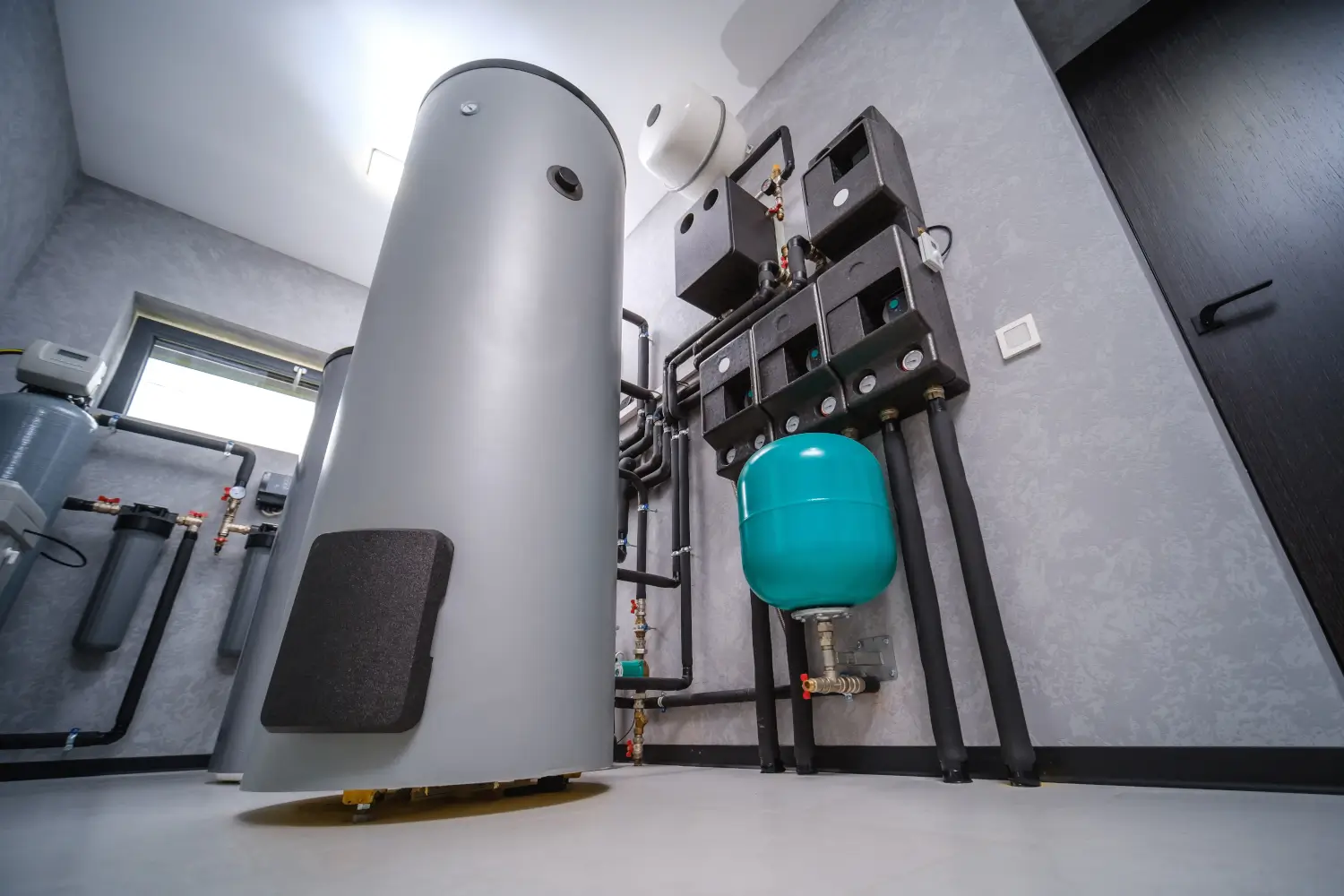
A standard gas storage tank usually gives you 8 to 12 years of water heater lifespan. Electric tanks tend to run a little longer at 10 to 15 years, since they have no burner or flue gases corroding the system from the inside. Heat pump, or hybrid, units land in that same 10 to 15 year window, and because they pull heat from the surrounding air instead of running an element constantly, they often see less wear in the right conditions.
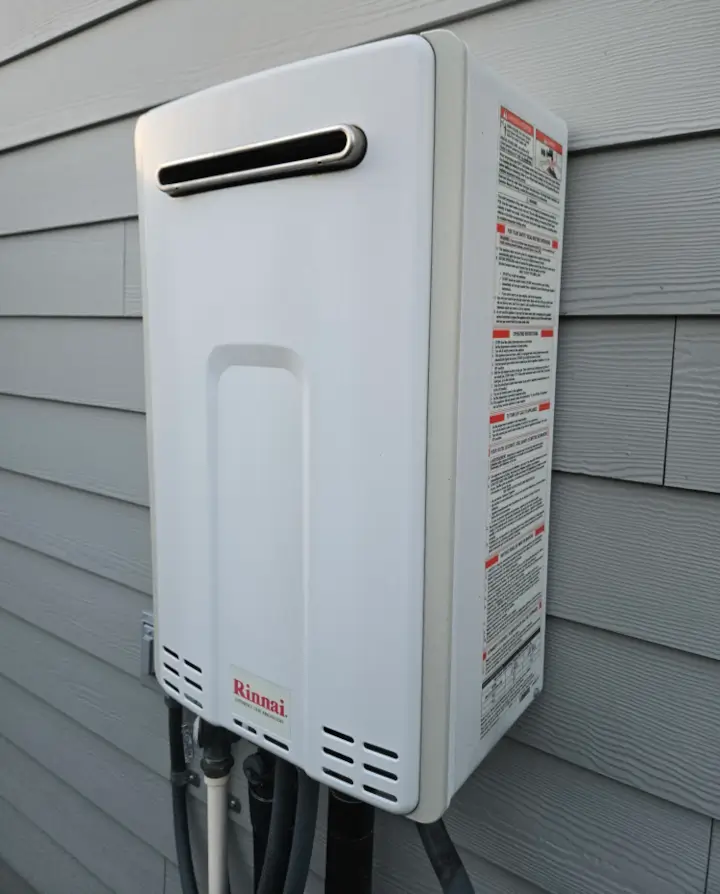
Tankless water heaters are the clear outlier. They frequently reach 20 years or more, because there is no standing tank of hot water sitting against steel and slowly rusting from the inside, which is the failure that ends most tank units.
One useful clue to expected water heater lifespan is the warranty tier. Manufacturers sell the same basic tank with a 6, 9, or 12 year warranty, and the longer warranty versions usually carry a larger anode rod and sometimes a thicker glass lining. A 12 year warranty tank is built to chase a longer water heater lifespan than the builder grade 6 year model that often comes standard in new construction. It is not a guarantee, but when you are shopping, the warranty tier is a fair shorthand for how the unit was built and how long it is meant to last.
Those averages explain why so much advice repeats the 8 to 12 year figure. What that figure leaves out is everything you control, which is why two identical tanks installed on the same street can reach very different ages. The next sections are where a water heater lifespan is really won or lost, starting with how to find out how old your unit already is.
How to Check the Age of Your Water Heater
Before you can judge how much water heater lifespan you have left, you need to know how old the unit actually is, and the install date is not always the same as when it was built. Every water heater has a rating plate or sticker on the side, and the serial number encodes the manufacture date. Most brands hide the month and year in the first four digits of the serial number, though the exact format varies by maker. As a quick example, a serial that starts with 1018 often means October 2018, while some brands use a letter to stand in for the month.
If you cannot decode it on your own, searching the brand name plus the words serial number lookup will usually get you there, or you can send us a photo and we will date it for you. Knowing the true age changes the math. A tank you assumed was 7 years old may turn out to be 13, which moves it from the repair column straight into replacement planning. When we evaluate a unit on a service call, the manufacture date is the first thing we check, because it frames every other decision about that water heater lifespan.
What Affects Water Heater Lifespan the Most
If you have ever heard someone brag about a 30 year old tank still running in the basement, they are not exaggerating. We see units past 20 and 30 years more often than the averages suggest, and the reason is almost never luck alone. A handful of factors decide whether your water heater lifespan lands at the short end of the range or sails well past it, and most of them are within your control.
The anode rod
Every tank has a sacrificial anode rod, a metal rod designed to corrode so the steel tank does not. Once that rod is used up, the tank itself becomes the next thing to rust. A rod costs little and takes under an hour to swap, yet most tanks are never touched and quietly rot from the inside. Replacing the anode every 3 to 5 years is the single biggest thing that extends a water heater lifespan past the averages, and it is the step almost everyone skips.
Sediment buildup
Minerals and grit settle to the bottom of the tank and bake into a crust over the burner or element. That layer makes the unit work harder, run hotter, and wear out faster, and it is the rumbling or popping you sometimes hear. On replacement calls around the Midlands, the tanks we pull are usually 10 to 15 years old and heavy with sediment that was never flushed out.
Water quality, and the Columbia soft water truth
Here is where local advice often gets it wrong. A lot of pages claim Midlands hard water is destroying your tank, but the City of Columbia’s own water utility reports its water at roughly 1 to 2 grains per gallon, which is moderately soft. You can confirm that on the city’s drinking water FAQ. For most homes on city water, scale is a minor factor, and age, the anode rod, and sediment are what end a water heater lifespan.
The picture changes if you are on a private well or a system that runs harder, which is common in the outlying Midlands. Harder water lays down scale faster and shortens the life of any tank, and that is where a softener earns its keep. If you are not sure where your home falls, our breakdown of hard water versus soft water explains how to tell and what to do about it.
Household demand and tank size
How hard the unit works matters too. A 40 gallon tank serving a busy household of five runs far more heating cycles than the same tank in a home of two, and more cycles mean more wear over the years. Undersizing is a quiet killer of water heater lifespan, because a tank that is always playing catch up never gets a rest. If your unit constantly runs out of hot water, it may be working itself to an early grave, and right sizing the replacement is one of the simplest ways to protect the next one.
Temperature setting
The thermostat setting plays a role as well. Running a tank hotter than it needs to be accelerates scale buildup and adds stress to the components, while a 120 degree setting protects the unit, prevents scalding, and still keeps bacteria in check. Backing the temperature down a few degrees is one of the easiest ways to add years of water heater lifespan at no cost at all.
Install quality and the build itself
A clean install with the right fittings, a working expansion tank, and correct venting protects the unit for years, while a rushed one shortens its life. There is also truth to the idea that they do not build them like they used to. Older tanks often used heavier steel and thicker glass lining, and modern cost and efficiency pressure trimmed both, which is precisely why anode and flush maintenance matter more on a tank built today than on one from decades ago.
Signs You Need a New Water Heater
Most water heaters give you warning before they quit. Learning the signs you need a new water heater lets you plan a calm replacement instead of mopping a flooded floor at 6 a.m. Catching these early is the difference between a swap on your schedule and an emergency call after a tank lets go. Watch for these.
- Age past 10 years. Once a tank crosses the decade mark, every other warning sign carries more weight, because it is already near the end of its expected water heater lifespan.
- Rusty or discolored hot water. Brown or metallic water from the hot tap usually means the tank is corroding from the inside, and that is not repairable.
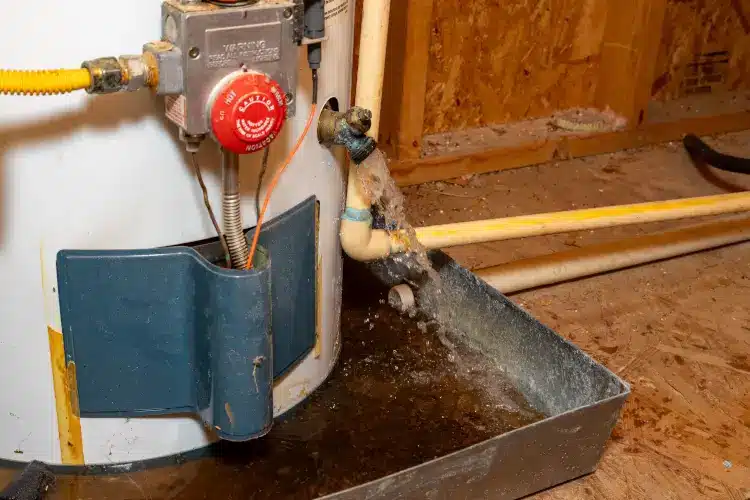
- Water pooling under the tank. A leak from the tank body, not a fitting, means the steel has failed. Our guide to a leaking water heater covers how to tell the difference.
- Rumbling, popping, or banging. That is sediment, and on an older unit it signals a tank near the end of its run.
- Not enough hot water, or it runs cold fast. Sediment plus a worn element or dip tube cut into how much hot water the tank can deliver.
- Repeated repairs. When you are fixing the same unit twice in a year, the tank is telling you something.
One or two of these on a younger unit may just need a repair. Several at once, especially on a unit near the end of its expected water heater lifespan, point toward replacement, and waiting is a gamble. A tank that ruptures can dump 40 or more gallons onto your floor in minutes, and the water damage often costs more than the heater did.
Tank vs Tankless Water Heater Lifespan: Is the Upgrade Worth It?
When a tank reaches the end of its water heater lifespan, a lot of Columbia homeowners ask whether they should switch to tankless. The honest answer is that it depends on your home and how long you plan to stay. On pure longevity, tankless wins. A quality tankless unit can deliver roughly double the water heater lifespan of a tank, often 20 years or more against 8 to 15, and it heats water on demand so you are not paying to keep a full tank hot around the clock.
The tradeoff is upfront cost and installation. Tankless units cost more to buy, and switching from a tank can require gas line, venting, or electrical changes, which is why the installed price runs higher. If you plan to stay in the home for many years, the longer water heater lifespan and lower standby energy use often justify the jump. If you expect to move soon, a quality tank is usually the more economical choice. We lay out both options honestly on an estimate, and our comparison of the different types of water heaters goes deeper on the math.
Repair or Replace a Water Heater?
The question we hear most is whether to repair or replace a water heater. The decision usually comes down to three things: the age of the unit, what specifically failed, and how the repair cost compares to a new install. The matrix below is the same logic we walk homeowners through on a service call.
| What you are seeing | Likely cause | Lean |
|---|---|---|
| Unit under 8 years, one part failed | Thermostat, element, thermocouple, or T&P valve | Repair |
| Pilot keeps going out or no hot water, newer unit | Igniter, thermocouple, or gas valve | Repair |
| Rumbling or popping noise | Sediment buildup | Flush first |
| Leak from a fitting or valve | Loose connection or worn valve | Repair |
| Leak from the tank body | Corroded, failed tank | Replace |
| Rusty or discolored hot water | Tank corroding internally | Replace |
| Unit 10+ years needing a major repair | Age plus repair cost | Replace |
| Repair quote over about half the price of new | Economics | Replace |
A useful rule of thumb: if the unit is past 10 years and the repair would cost more than about half the price of a new one, replacement is almost always the smarter money. Another way to look at it is cost per year of remaining life. A 400 dollar repair on a 3 year old tank with a decade of water heater lifespan left is a sound investment, while that same 400 dollars sunk into a 12 year old tank that may leak next winter is throwing money at a unit on borrowed time. Weigh the repair against the age, not just against the price of a new heater.
There is a safety angle too. A failed temperature and pressure relief valve, scorching at the burner, or signs of a backdrafting flue are not wait and see repairs. When we find a safety issue on an older unit, replacement is often the responsible call rather than patching a tank already near the end of its water heater lifespan.
What Water Heater Replacement Costs in the Columbia Area
Once replacement is on the table, the next question is cost. Pricing for a water heater replacement in Columbia SC depends on the type and size of the unit, the condition of the existing connections, and any code upgrades the job requires. The ranges below reflect typical installed pricing in the Columbia and Midlands area, not equipment alone.
| Unit type and size | Typical installed range | Notes |
|---|---|---|
| Gas tank, 40 to 50 gal | $1,300 to $2,600 | Most common swap in the Midlands |
| Electric tank, 40 to 50 gal | $1,200 to $2,400 | Simpler venting than gas |
| Tankless, gas | $3,000 to $6,000 | Higher if gas line or venting needs upsizing |
| Hybrid heat pump, 50 to 80 gal | $2,500 to $4,500 | May qualify for an efficiency tax credit |
Those are planning numbers, not a quote. A straightforward swap of a like for like tank sits at the low end of each range. The final figure depends on the condition of what is already there and what current code requires during the replacement.
Several things move a quote up from the base. Current code may call for a new expansion tank, a drain pan with a routed discharge line, updated venting, or a sediment trap on the gas line, and an older home may need those brought up to standard. Switching fuel types or relocating the unit adds labor. The permit and inspection are a small line item that protects you and is not the place to cut corners.
Timing matters to cost too. A planned replacement, scheduled while your old unit is still limping along, lets you compare options and avoid rush pricing. An emergency replacement after a tank floods costs more and forces a fast decision, which is one more reason to act on the warning signs before the end of a unit’s water heater lifespan rather than after. South Carolina requires a permit for a water heater replacement, and the inspection is there for your safety, so be cautious of any installer who skips it. Our overview of water heater permits and code in Columbia explains what the inspector checks.
If you want a firm figure for a water heater replacement in Columbia SC, the only honest way is an in home look at your setup. You can see the full scope of our water heater installation and repair work, and we give you a clear price before anything starts.
How to Make Your Water Heater Last Longer
Almost every long lived tank has one thing in common: someone took care of it. A little maintenance is what separates the 8 year tanks from the 25 year ones, and most of it is simple. Here is the schedule we recommend to stretch a water heater lifespan as far as it will go.
| Task | How often | DIY or pro |
|---|---|---|
| Flush the tank | Yearly, every 6 months on a well | DIY or pro |
| Replace the anode rod | Every 3 to 5 years | Pro |
| Test the T&P relief valve | Yearly | DIY or pro |
| Set thermostat to 120°F | Set once, check yearly | DIY |
| Inspect for leaks and corrosion | Yearly | DIY or pro |
| Descale a tankless unit | Yearly | Pro |
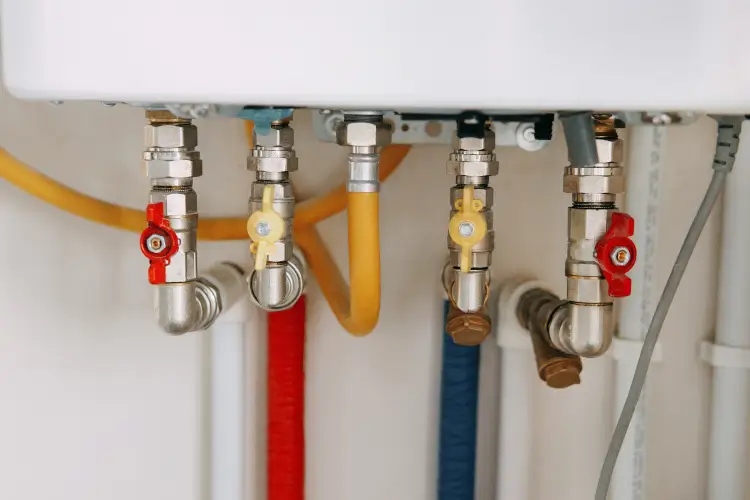
Flushing is the big one. Draining a few gallons until the water runs clear, once a year, clears the sediment that quietly kills tanks. If you are on a well or harder water, do it every six months. Our guide to draining your water heater walks through it step by step, or we can fold it into a yearly visit.
Set the thermostat to 120 degrees. Higher is a scald risk and bakes on scale faster, lower invites bacteria. Replace the anode rod every 3 to 5 years, test the temperature and pressure relief valve yearly, and have a tankless unit descaled once a year. When the time finally comes to upgrade, our comparison of the different types of water heaters helps you pick the right unit for your home and budget.
If that list feels like more than you want to take on, an annual professional service visit covers all of it in one stop. We flush the tank, check the anode, test the relief valve, confirm the temperature setting, and inspect the connections and venting, which is about the cheapest insurance there is for protecting a water heater lifespan. For most homeowners, one short visit a year is what turns an average tank into one that outlives its warranty by years.
Local Water Heater Service in Columbia and the Midlands
Whether you are nursing an older tank toward a few more years or staring at a puddle and a cold shower, knowing your water heater lifespan turns a stressful surprise into a planned decision. Replace on rust, leaks from the body, and age past 10 years. Repair a single failed part on a younger unit. Flush yearly, mind the anode, hold the temperature at 120, and any tank will push its water heater lifespan past the label.
Plumb Time Plumbing and Drains has handled water heater repair and replacement across Columbia, West Columbia, Cayce, Oak Grove, Seven Oaks, St Andrews, and the greater Midlands for over 28 years, and every job is backed by our master plumber license. You can see the full list of areas we serve to confirm we cover your neighborhood.
Water Heater Lifespan FAQs
Still trying to figure out how much life is left in your unit, or whether to repair or replace it? These are the questions Columbia and Midlands homeowners ask us most often about water heater lifespan, the signs of failure, and what a replacement involves. If your situation is not covered here, call us at (803) 988-9202 and describe it, and we will tell you straight whether it can wait or needs a visit.
How long does a water heater last in the Columbia area?
Most tanks in the Columbia area last 8 to 15 years, gas on the lower end and electric a bit higher, while tankless units often pass 20. With City of Columbia water being moderately soft, age, sediment, and a spent anode rod usually decide the real lifespan.
Why does my water go hot, then warm, then cold after a few minutes?
That pattern usually points to a broken dip tube, heavy sediment, or a tank too small for your demand. On gas units a weak burner or thermostat can do it too. Have it checked, since the fix ranges from a cheap part to a sign the tank is near the end.
Is it worth replacing only the anode rod on a very old water heater?
On a tank past about 12 years, usually not. A fresh anode protects steel that may already be corroded, so you risk paying for a part on a tank that leaks soon anyway. Anode replacement pays off as routine upkeep on a younger unit, not as a rescue for an old one.
My tank is knocking and a flush barely helped. What now?
Hardened sediment sometimes will not drain through the valve, especially on an older unit, so a light flush does little. A plumber can do a deeper flush or break up the buildup, but if the tank is past 10 years and still noisy, that knocking is often a sign it is time to plan a replacement.
Do self cleaning or rotoswirl style tanks really last longer?
They can help. Those designs stir the bottom of the tank to keep sediment from settling and hardening, which reduces one cause of early failure. They still need anode checks and a yearly flush, though, so they are a head start on lifespan, not a substitute for maintenance.
If I install a higher wattage electric unit, do I need heavier wire or a bigger breaker?
Often yes. A higher wattage element draws more current, which can require a larger breaker and heavier gauge wire to stay within code. This is exactly why a permit and a licensed plumber or electrician matter on a swap, so the circuit is sized correctly and safely.
We have a Cascade Water Heater that is 45 years old & still working ………
Twenty-one years ago, I did my research and bought a Sears Kenmore Power Miser 9+ which uses the “self-cleaning rotoswirl,” which I thought at the time would help because we have VERY hard water where I live. Has delivered hot water ever since and I hate to admit that I have never drained it, although I should know better. I think this water heater used two 3800-watt heating elements as I remember. Although I know I have a 30-amp breaker, I just wonder if I will need to go with a heavier gauge wire if I buy a new unit with two 4500 or 5500 heating elements. Anyway, apparently, I found a good product back then…….too bad they don’t still make the same heater.
Tom, I totally agree. I have a Kenmore power miser 12+ water heater and it is 17 years old and still working great. I wish Kenmore still made it.
I have a 23 year old Ruud solar/electric water heater that has perfect glazed green glass inside with no damage to speak of.
Why is my water super hot when I turn it on , about 5-7 minutes on warm when I turn it down…ioe starts to get cold..after 8-9 minutes, it’s all cold..
Have to time my shower
My Sentry water heater is almost 50 years old and still going strong. Not replacing this work horse anytime soon!
We have a GE Profile SmartWater heater that is over 20 years old. No problems yet ! It has never been flushed OR serviced. It does say self cleaning on it. I guess we are lucky ?
Dave in Georgia
I have always got 20 plus years out of a hot water heater. Some one must be buying a Chinese model to only get 8 to 12
My water heater from 1992 just hit 30 years old, but does appear to finally be failing and I will be replacing it in a week or two. I doubt anything made today will last even half that long, unfortunately.
We are in the same situation I’m trying hard to find a good one but no luck
My water heater was put in in 2003, its 19 yrs old, lve lived here for 12 of those 19 yrs and havent had any problems to date. I hope lm not jinxing myself, but it doesnt leak, make noises or anything and delivers hot water as we need it. I was stressed because everything l’ve read says to replace them after 8-12 yrs. Welp, until this one blows or quits, lm keeping it. I will be having it looked at to see if it needs servicing, but its staying put until it dies…Thanks for the info about your times on good water heaters!!
This 8-12 years thing feels very shiesty to me. Water heaters last way longer than that, at least in the region where I live. I think this time frame simply amounts to people trying to protect themselves from liability. I’ve had 4 homes in 39 years of home ownership, and I’ve only *had* to replace a water heater once, and that was in our first house which was a single wide mobile home, the heater was roughly 20 years old. I had 2 in my last house; 1 was 25 years old and still going strong when we sold, and the other 20 years old and working great. The house before that was a double wide with a 20+ year old WH in it, no problems at all, and our current house had a 30 year old water heater in it when we bought, that even though it was working great, we replaced it for a larger one. As a Realtor, I’ve seen dozens and dozens of water heaters called out in home inspections for being too old, even though they worked fine. I’m not buying this 8-12 years thing.
I have a A -O smith for 26yrs an I haven’t drain it for 12years an it just started to give me an bad smell in the first floor bath. I was just going to replace the nod. But it’s been 26 yrs and I rather just replace the water heater..My only problems is getting one as good as the one I have, Any suggestion would be appreciated.. can’t seem to find the same one
I have a Ruud going on 27 years now – replaced heating element twice and anodes and safety valve – still working fine
I have a GE Smartwater Heater 9 yr warranty 40 gal self cleaning model bought and installed about 1995/6. It’s 2023 now. A few months ago it started knocking. Read up and found it was most likely sediment build up. I drained it (first time), flow was slow and really no sediment came out. Knocking persists so I’m in the market for a new one now before the current one breaks down on me. Unfortunately, the big big stores only carry Rheem and AO Smith and I doubt they’ll be as good but this time around on the new one, I will regularly be replacing the anode rod and flushing it to try and get as much longevity as my old GE.
My US Craftmaster 40 gal lasted 26 years
I have a Kenmore power miser with rotoswirl 42 years old and has no drain. still working fine
We have a Reliance water heater that turns 27 next month, manufactured Feb 1997, never had any issues at all from the time we’ve lived here or about 20 years, an absolute workhorse
I have an A. O. Smith which was installed in 1956 and is still running strong in 2024-68 years!
I have a RUUDGLAS PACEMAKER PE40-2 that has been in my home since built it in 1992. We did have to replace the lower heat element about 10 years ago but other than that it has been perfect.
I am getting ready to replace it but I am also curious how much life is still in it. The RUUDGLAS was installed Jan 92 and it is now Apr 2024 which is 32 years and 4 months with the unit still running strong.
Impressive
Randy