📅 Updated August 4, 2026
Key Takeaways
- Expect $4,000 to $15,000 to repipe a house in the Columbia area, and Plumb Time quotes the exact price in writing before any work begins.
- Seven warning signs point to failing pipes: galvanized or lead lines, discolored water, low pressure, repeat leaks, rising repair bills, visible corrosion, and pipes past their lifespan.
- A screwdriver scratch and a kitchen magnet can tell you in seconds whether your pipes are galvanized steel, copper, plastic, or lead.
- PEX repiping installs faster and costs less than copper, though it has real limitations, and we lay them out plainly below.
- Most repipes keep your water running: the new lines go in beside the old ones, and the final switchover takes hours, not days.
If you plan to repipe a house in the Columbia area, expect the job to run $4,000 to $15,000, with most homes landing near the middle of that range. The final number depends on the size of the home, the number of fixtures, the pipe material you choose, and how hard the old lines are to reach. This guide walks through seven warning signs that your pipes are failing, a simple test to identify what your pipes are made of, and a straight look at PEX repiping, the approach most jobs use today. And as with every job we do, you get an exact written quote before any work begins.
What Repiping a House Involves
Repiping a house means replacing the water supply lines that feed every faucet, shower, toilet, and appliance. It covers the pressurized pipes inside your walls, floors, and crawlspace. Your drain lines and the buried lateral running out to the street are a separate system, so if your trouble is backups or soggy spots in the yard, start with our sewer line replacement guide instead.
The decision to repipe a house usually starts small: one stubborn leak, one rusty glass of water, one repair bill too many. The good news is that the situation is rarely urgent. In nearly every case you have time to plan, compare materials, gather quotes, and schedule the work on your own terms instead of the pipe’s terms. This guide exists so you can do exactly that.
Here is the part that surprises most homeowners: you keep your water. In most homes, the new lines are built beside the old ones while the old system stays live. A small home takes two to three days, and a large or multi story home can take up to a week. Either way, the water is only off during the final switchover, which usually takes a few hours. You will not spend a week hauling buckets.
Breaking Down the Cost to Repipe a House
There is no one size fits all number, but the drivers are consistent. Home size and fixture count matter most, since every bathroom adds runs of pipe and hours of labor. Accessibility matters almost as much: a raised home with a roomy crawlspace prices lower than a slab home where lines must be rerouted through walls and the attic. Material is the third lever, and it is where you have the most say. In the Columbia area, the cost to repipe a house typically runs $4,000 to $15,000, and we put the exact figure in writing before the first cut is ever made.
Labor is the biggest slice of any repipe bill, often more than the materials themselves. That is a large part of why PEX repiping has taken over the market: the tubing bends around corners, so it needs fewer fittings and far fewer hours to install than rigid pipe. Less time in your walls means a smaller invoice and fewer drywall patches when the job is done.
7 Warning Signs It Is Time to Repipe
You cannot see most of your plumbing, but failing pipes announce themselves if you know what to watch for. Here are the seven warning signs we weigh when a homeowner asks whether it is time to repipe a house. One sign alone rarely justifies a repipe. Two or three together usually mean the system is telling you something.
1. Your Home Still Has Galvanized or Lead Supply Lines
This is the one sign that stands on its own. Galvanized steel rusts from the inside out for decades before the first visible leak, and lead pipe is a health concern at any age no matter how solid it looks. If your home was built before the mid 1970s and the plumbing has never been replaced, material alone makes a galvanized pipe replacement a matter of when rather than if. The identification test further down this page takes less than a minute.
2. Rust Colored, Smelly, or Metallic Tasting Water
Water should run clear and taste like nothing. A yellow, brown, or red tint means rust and sediment are shedding off the inside of your pipes and riding along to your glass. A metallic taste or a musty smell often shows up before the color does. If discoloration appears at every tap, and especially if it is worse on the hot side, the pipes themselves are the source rather than the water utility.
3. Low or Uneven Water Pressure
Corrosion buildup narrows pipes the way plaque narrows arteries, and the flow drops a little more each year. The telltale pattern is pressure that varies room to room, since the buildup never happens evenly. If weak flow is your only complaint, run through our guide to improving shower water pressure first, because the fix is sometimes a clogged aerator or a half closed valve. When the whole house runs weak and the easy fixes change nothing, the supply lines are the suspect.
4. Leaks That Keep Coming Back
Any pipe can spring one leak. A pattern of leaks in different spots is a different story: it means the pipe wall itself has thinned past its service life, and every patch is a down payment on the next failure. Repaired sections hold while the untouched pipe on either side keeps aging. When you find yourself learning your plumber’s truck by sound, the math has shifted from repair to replacement.
5. Repair Bills That Keep Stacking Up
Pull out the last two or three years of plumbing invoices and add them up. Homeowners are often surprised to find they have already spent a meaningful fraction of a repipe on piecemeal fixes that did nothing to slow the next failure. Once repeat repairs cross that line, it often costs less over a few years to repipe a house once than to keep paying for failures on lines that are already gone.
6. Visible Corrosion on Exposed Pipes
Walk your crawlspace, utility room, and water heater closet once a year and look at every pipe you can see. Discoloration, rust freckles, flaking, dimpling, or crusty white and green deposits at the joints all signal corrosion working on the metal. Exposed pipe is the honest sample of your system: whatever is happening where you can see it is happening inside the walls too, where the humidity is often worse.
7. Pipes Past Their Expected Lifespan
Every material has a clock, and the table above shows where each one runs out. Loud banging, clanking, or groaning from aging lines is often the sound of that clock ticking. If you plan to repipe a house eventually, doing it on your schedule beats doing it the week a wall opens up on its own. A planned repipe is an inconvenience. A burst supply line on a holiday weekend is a flooded floor, a soaked ceiling, and a much bigger bill.
Seeing Two or More of These Signs?
Tanya answers the phone, Manny checks the pipes, and you get a straight answer with an exact quote before any work begins.
How to Tell What Your Pipes Are Made Of
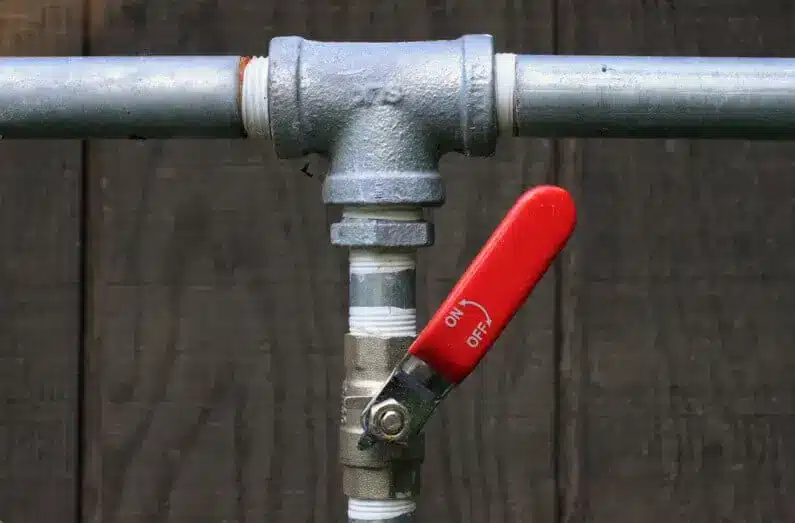
Galvanized pipe replacement starts with recognizing older steel lines like this tee and shutoff valve.
You need two tools from the kitchen junk drawer: a flathead screwdriver and a magnet. Find an exposed run of pipe where the water line enters the house, in the crawlspace, or near the water heater. Scratch the surface with the screwdriver and note the color underneath, then hold the magnet against the pipe.
A copper colored scratch with no magnet pull means copper. White or cream pipe with no magnet pull is plastic, either CPVC or PVC. A silver gray scratch combined with a magnet that sticks firmly is galvanized steel. And a soft, shiny gray scratch on pipe the magnet ignores can mean lead, which deserves a professional look right away. If the test points to galvanized or lead, a galvanized pipe replacement plan moves from someday to soon, and the next section explains why.
One more tip from the field: check more than one spot. Plenty of Midlands homes were partially updated over the years, so the copper you can see at the water heater does not guarantee copper inside the walls. Before you repipe a house, or decide you do not need to, know what every section is made of. Our estimate visit maps the materials room by room so nothing gets assumed.
The Health Side of Old Galvanized and Lead Pipes
The zinc coating that gives galvanized pipe its name protected the steel for decades, but it wears away from the inside, and the corroded interior that remains can trap lead shed from old service lines, fittings, and solder upstream. The CDC lists galvanized iron pipes among the household plumbing sources that can raise lead exposure risk, alongside lead solder and older brass fixtures. Actual lead pipe is a bigger concern still, since the EPA notes there is no known safe level of lead in a child’s blood.
None of this is a reason to panic, and it is not a sales pitch. It is a reason to know what your pipes are made of and to test your water if the answer is galvanized or lead. Here is what nearly three decades in Midlands crawlspaces has shown us: in pre 1975 homes around Columbia and West Columbia, we regularly cut out galvanized lines rusted shut from three quarters of an inch inside to the width of a pencil, and that narrowing at the fittings, not the water heater, is usually why the shower dies when someone flushes a toilet.
If your test points to either material, two steps cover you. Have the water tested through your utility or a certified lab, and get a galvanized pipe replacement quote so you are working with a real number instead of an imagined one. Most homeowners find the fact is smaller than the fear, and either way you are deciding from knowledge rather than guesswork.
Why Most Repipes Use PEX Today
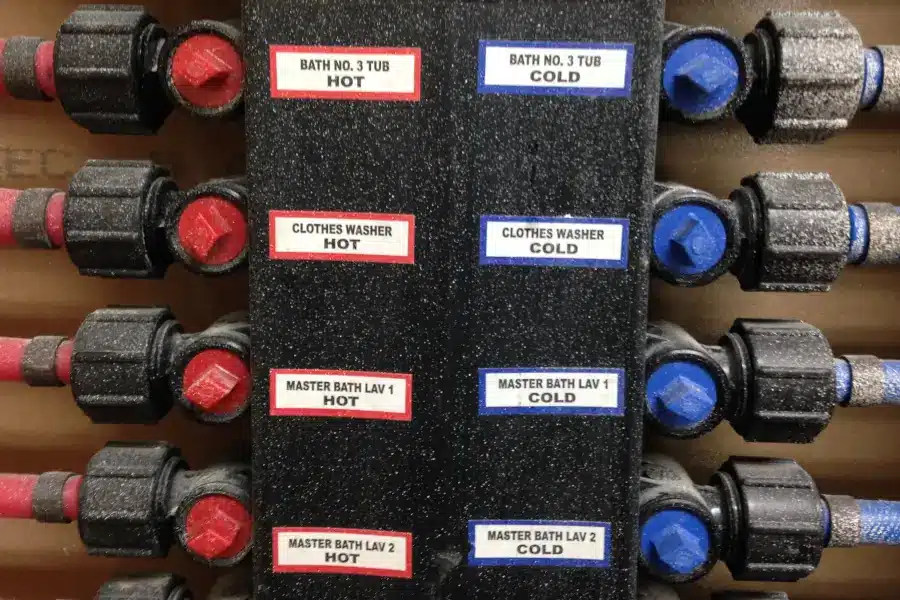
PEX repiping runs a labeled hot and cold line to each fixture from one central manifold.
PEX is flexible plastic tubing that bends around framing instead of fighting it, and when we repipe a house with it, that flexibility is where the savings come from. Fewer elbows means fewer joints that can leak, fewer holes cut in your drywall, and installation hours measured in days instead of a week. Material cost sits well below copper, and since labor is the biggest line on a repipe invoice, the time savings is where most of the money stays in your pocket.
The manifold in the photo above is the quiet advantage nobody mentions. A home run PEX repiping layout gives every fixture its own labeled line from one central board, like a breaker panel for water. Need to swap a bathroom faucet? Close that one valve and every other tap in the house keeps running. PEX also tolerates freezes far better than rigid pipe, because the tubing can swell slightly instead of splitting, and in a Columbia cold snap that difference shows up on the coldest night of the year.
The Honest Limitations of PEX
A reader on our old PEX article asked a fair question after getting an estimate to repipe a house: what about the downsides, like chlorinated water and recyclability? Straight answers. Modern PEX is rated and certified for chlorinated municipal water, and the early fitting failures that gave 1990s systems a bad name are a solved problem, but chlorine resistance does vary by grade, so the brand your plumber installs matters. PEX cannot be recycled the way copper can, and copper scrap has real value at end of life while PEX goes to the landfill.
PEX also has hard rules. Sunlight degrades it, so it never runs outdoors or through unshaded attic light. Rodents will occasionally chew it, which copper shrugs off. And it cannot connect directly to a water heater, so code requires a short section of rigid pipe at the connection. When a run needs to live outside, feed a bare uninsulated attic, or meet a specific code call, we quote copper for that section and tell you why. A good PEX repiping job is upfront about every one of these limits. The right material is the one that fits the house, not the one that fits the sales script.
Repair It or Repipe It?
Not every symptom calls for new pipes, and we never recommend replacing a system a repair would fix. This table shows how we decide when a repair is enough and when it is smarter to repipe a house.
There is also a middle road. If your budget will not stretch to the whole job at once, a PEX repiping project can be staged: replace the worst runs now, usually the hot side and anything galvanized, and schedule the rest. Staging costs somewhat more in total than one continuous job, but it beats waiting on a failure to force the decision. We will map out both paths in the quote so you can compare real numbers instead of guesses.
Does Repiping Add Value to Your Home?
Yes, though the value shows up in avoided pain more than in the appraisal line. Home inspectors flag galvanized supply lines by name, and buyers use that flag to demand discounts far larger than the repair itself costs. Repiping a house before listing removes that lever, smooths the inspection, and can calm an insurer that has seen repeated leak claims on the property. New supply lines will not sell the house by themselves, but old ones can stall the sale, and waiting to repipe a house until a buyer forces the issue is the most expensive way to do it.
Get a Straight Answer Before You Spend a Dollar
If any of the seven signs above sound like your house, the next step costs you nothing but a phone call. Tanya answers, and Master Plumber Manny Anderson has spent over 28 years in Midlands homes reading pipes for a living. We will tell you what your pipes are made of, which signs are real and which are noise, and exactly what we would charge to repipe a house or make the repair, in writing, before any work begins. That is how our plumbing services have run since day one, and it is why the second generation of some families still calls us.
Repiping a house in the Columbia area starts with a straight answer and an exact written quote.
Ready to Stop Patching and Start Fresh?
Family and veteran owned. Licensed, bonded, and insured. Military and senior discounts.
Repiping Questions Columbia Homeowners Ask Us
These are the questions we hear most on repipe estimates around the Midlands. If yours is not here, call the office and Tanya will get you an answer the same day.
How much does it cost to repipe a house in Columbia SC?
In the Columbia area, the cost to repipe a house typically runs $4,000 to $15,000, with most homes landing near the middle. Home size, fixture count, pipe material, and access drive the price. We inspect first and put the exact figure in writing before any work begins, so the number never moves on you.
How long does repiping a house take?
Most homes take two to three days, while large or multi story homes can take up to a week. Repiping a house rarely leaves you without water, because the new lines go in beside the old ones. Your water stays on through the old system until the final switchover, which usually takes only a few hours.
Will repiping tear up all my walls?
No, far fewer openings are needed than most homeowners expect. We cut small access panels at fixtures and key runs, and the flexibility of PEX keeps wall cuts to a minimum compared to rigid pipe. Every opening is mapped before work starts, so patching afterward is quick and your home gets back to normal fast.
Is PEX as good as copper pipe?
For most homes, yes. PEX resists corrosion, rides out freezes better than rigid pipe, and installs for less, which is why PEX repiping leads most of the quotes we write. Copper is still right outdoors, where sunlight reaches, and where code requires it. We price both options and let you make the call.
Do I need a full repipe to fix one leak?
No. A single leak can be repaired on its own, and we never recommend a repipe when a repair will solve the problem. The concern is a pattern: when leaks repeat in different spots, the pipe wall itself is failing and patches stop paying off. We tell you straight which of the two situations your home is in.
How do I know if my pipes are galvanized?
Scratch an exposed pipe with a screwdriver and hold a magnet to it. A silver gray scratch plus a magnet that sticks means galvanized steel. A copper colored scratch means copper, and a soft gray scratch the magnet ignores can mean lead, which deserves prompt attention. We can confirm the material in minutes.
Does repiping add value to my home?
Yes, in a practical way. New supply lines help the home pass inspection, reassure buyers, and can settle an insurer rattled by repeated leak claims. You may not recover every dollar at sale, but you avoid the steep discount buyers demand once an inspector flags failing galvanized pipe in their report.
Do you give free quotes on re-piping a house?